1 / 5
 MGW Glass
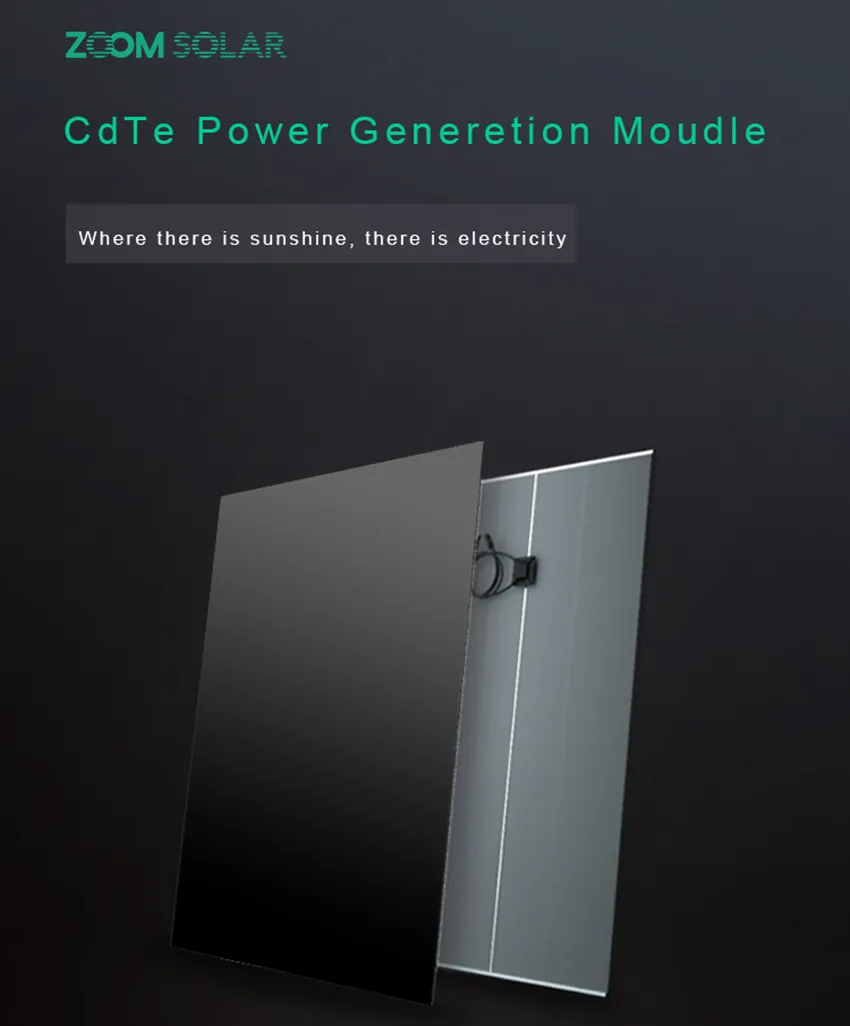
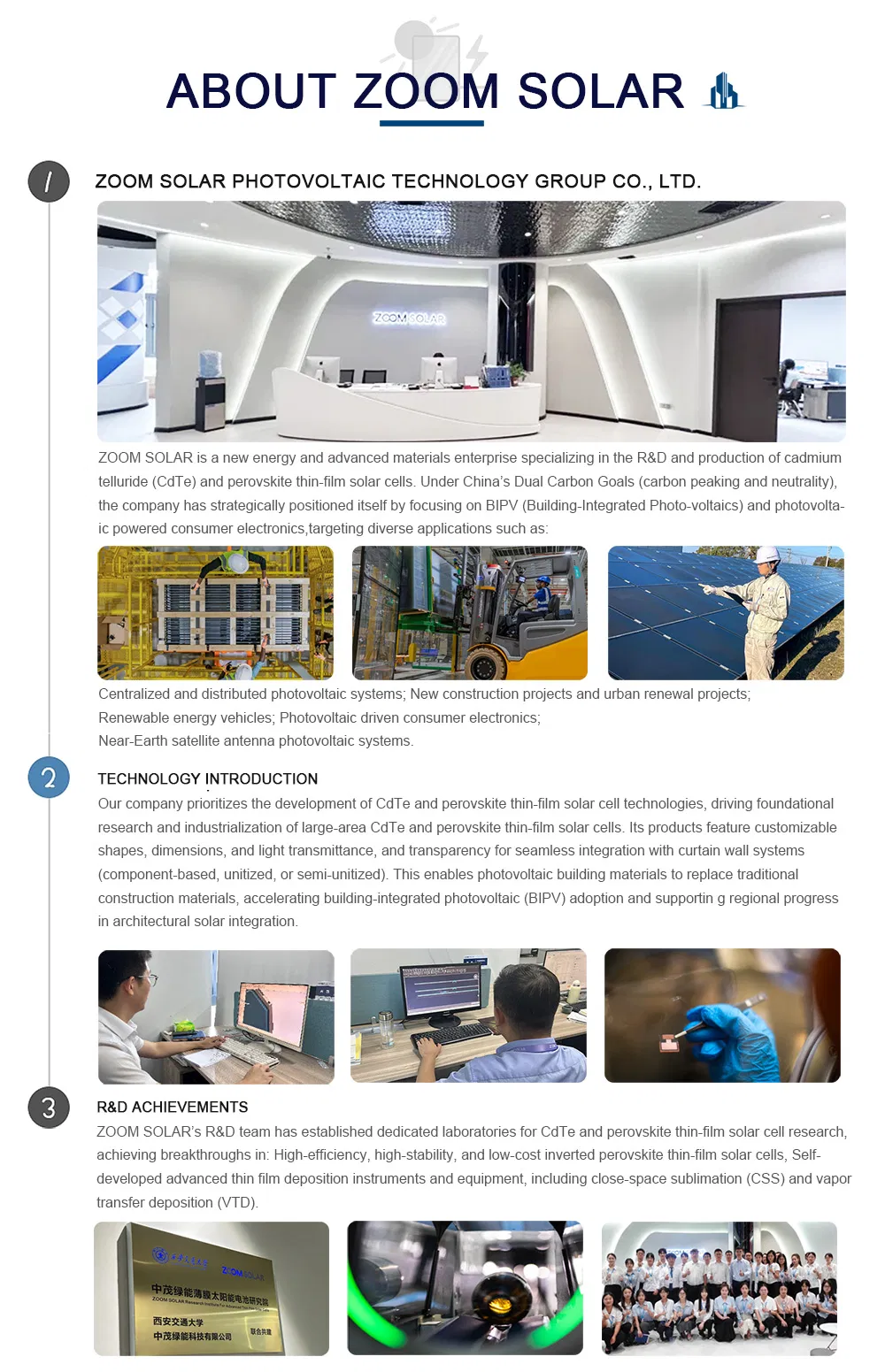
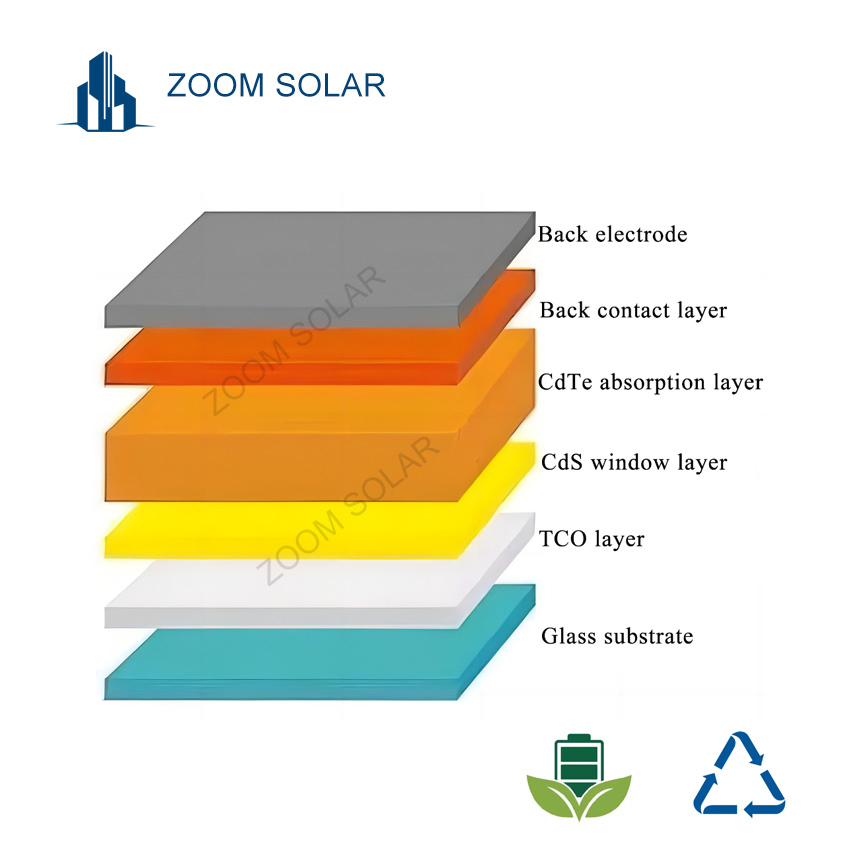
The structure of cadmium telluride thin-film solar cells consists of five layers: glass substrate, transparent conductive oxide layer (TCO), cadmium sulfide (CdS) window layer, cadmium telluride (CdTe) absorption layer, and the back contact/electrode layer.
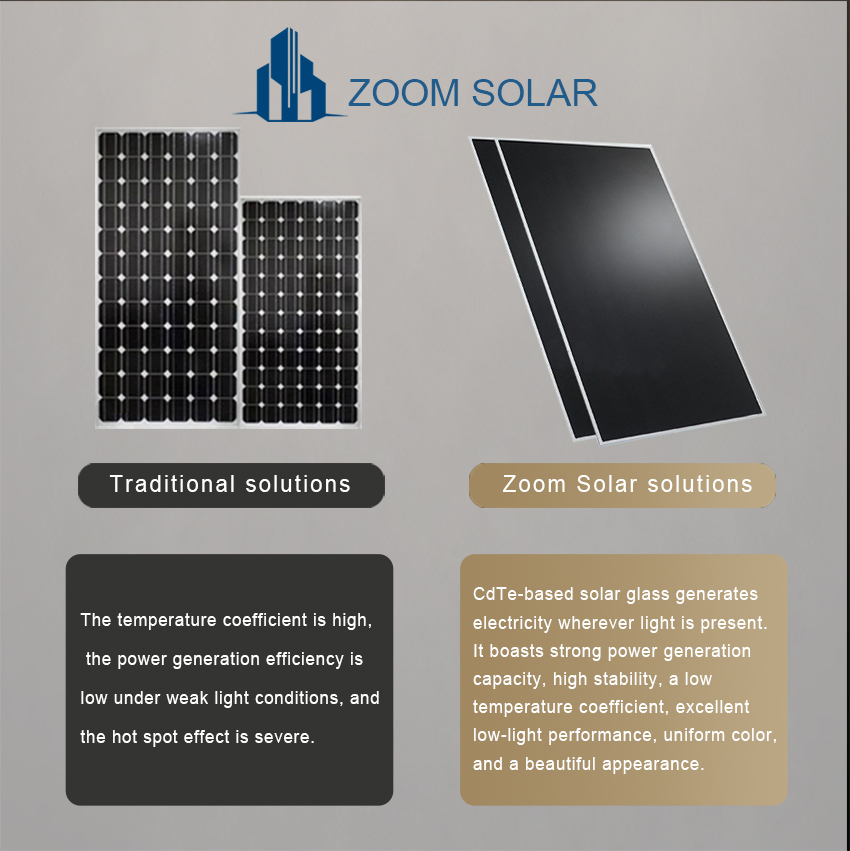
CdTe is a direct bandgap material with excellent absorption. Its luminous effect in conditions such as early morning, evening, snow, or haze is significantly superior to crystalline silicon cells.
The temperature coefficient is approximately -0.21 to -0.25%/ºC, roughly half that of crystalline silicon. This ensures stable performance and higher power generation in high-temperature environments.
With a bandgap width of 1.47eV, CdTe responds perfectly to the solar spectrum. It can absorb over 90% of visible light with just 1μm thickness. Theoretical efficiency reaches up to 28-29%.
| Specifications | Parameter Range | Applicable Scenarios | Thickness / Transmittance | Power Output |
|---|---|---|---|---|
| Home | 1200×600mm / 1600×800mm | Roofs / Balcony Railings | 10-12mm / 10%-60% | 100W-300W/unit |
| Commercial | 2400×1200mm / 3000×1500mm | Factory Walls / Power Plants | 22mm / 10%-60% | 500W-1000W/unit |
| Custom | 1000-4000mm available | Special Curtain Walls | 6-20mm / 10%-60% | By Size |
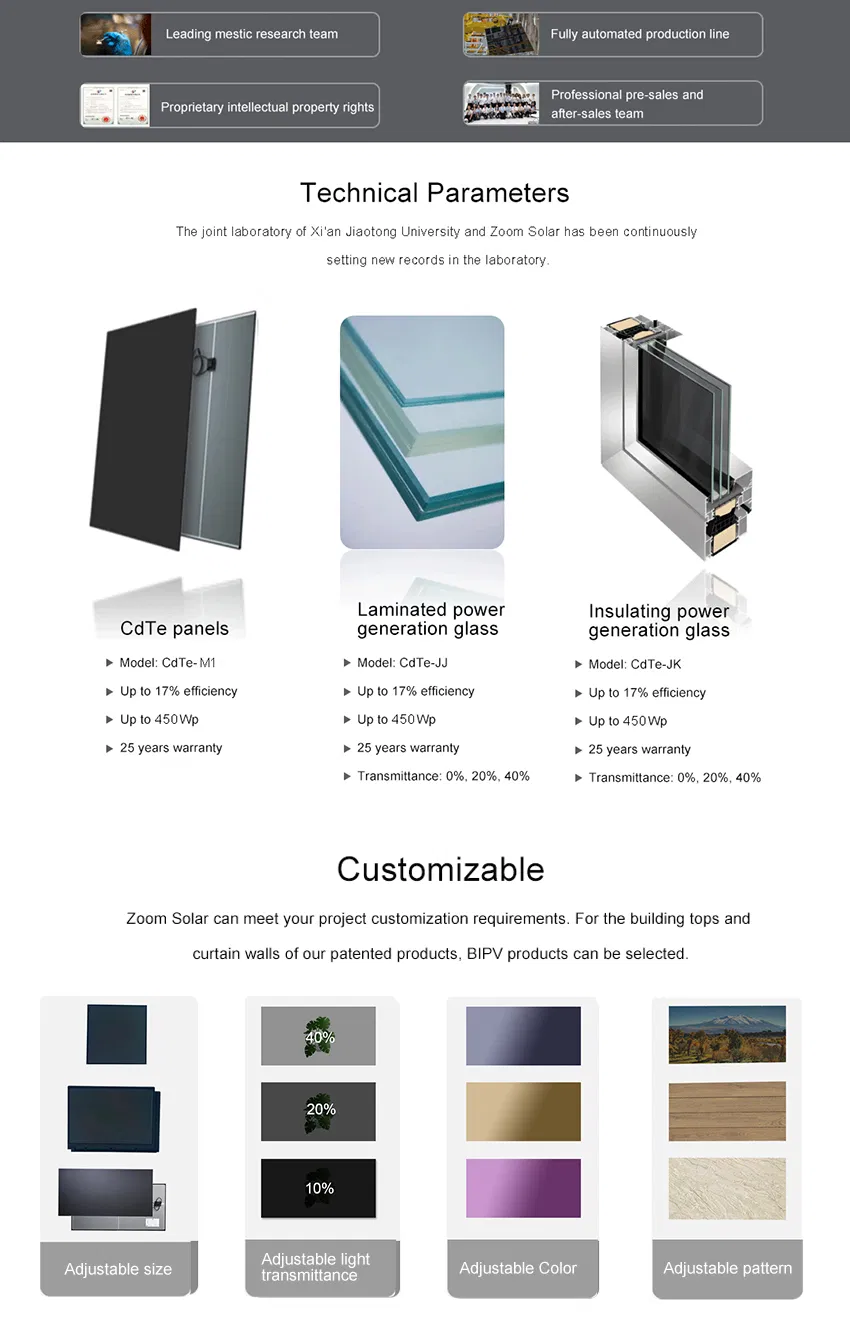
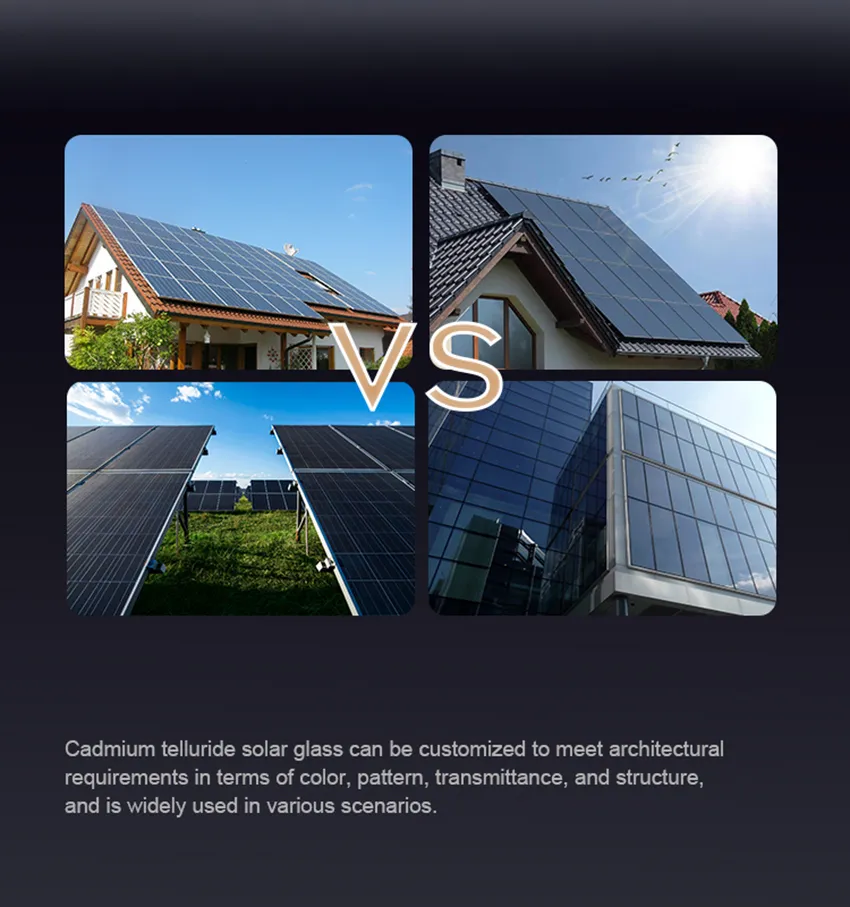
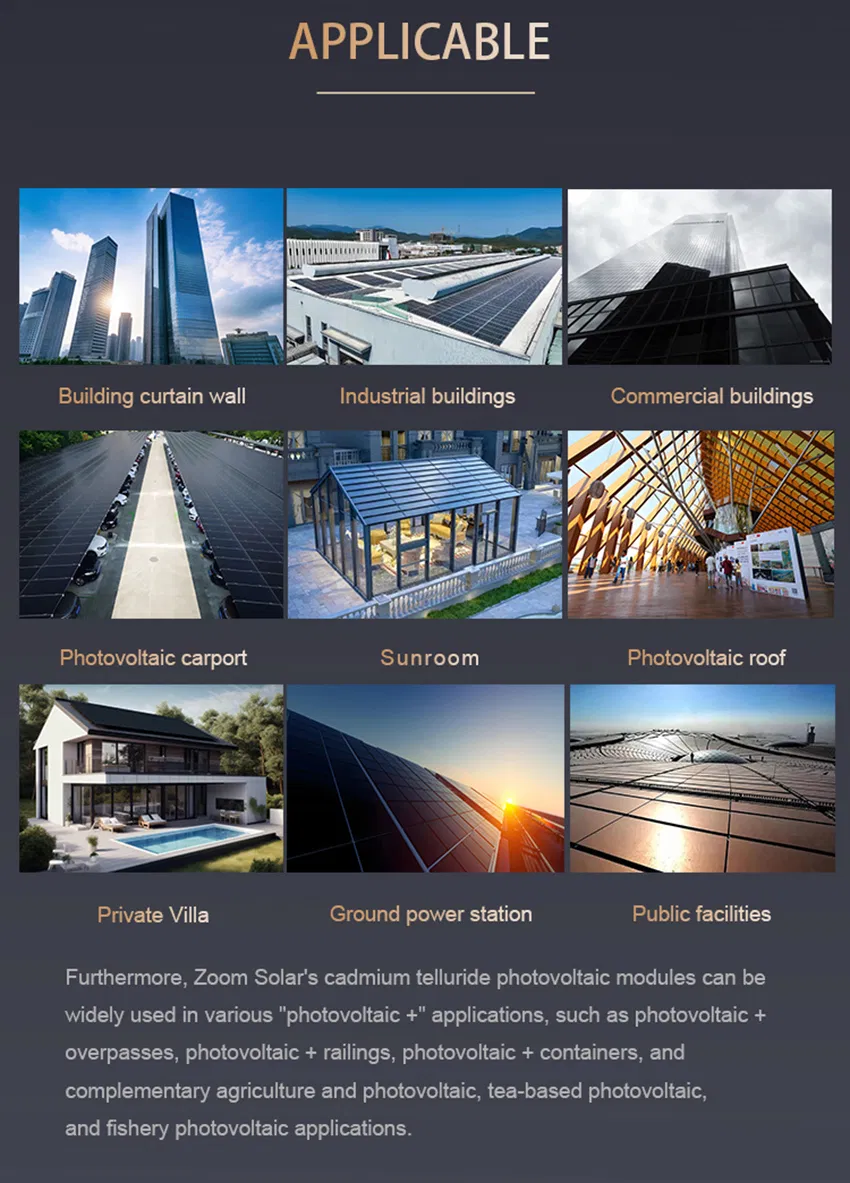
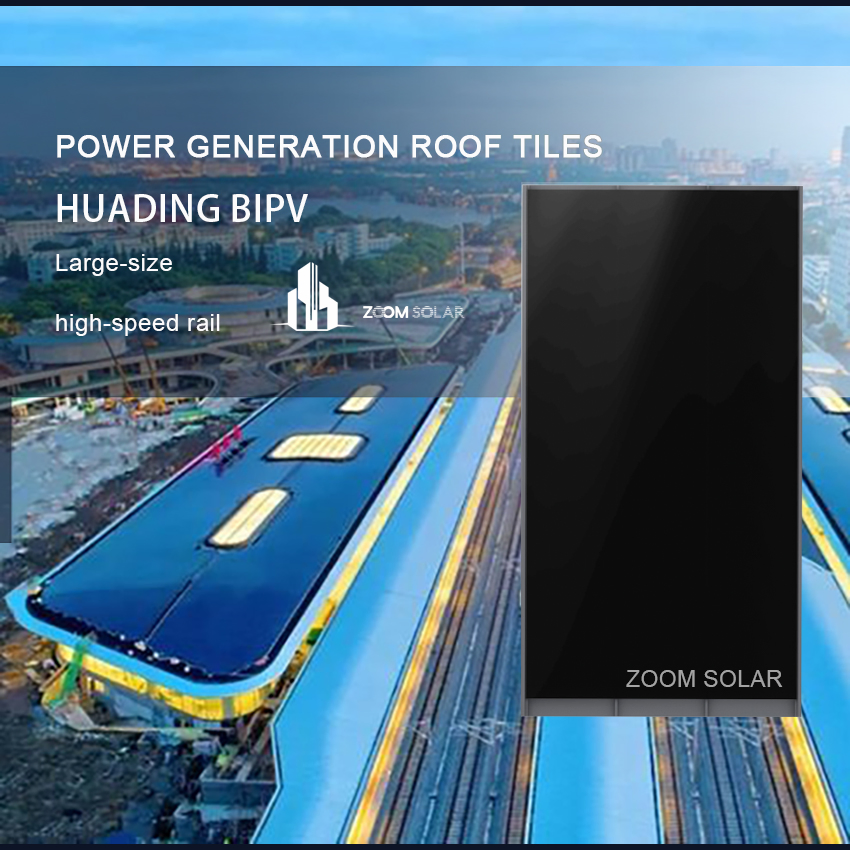
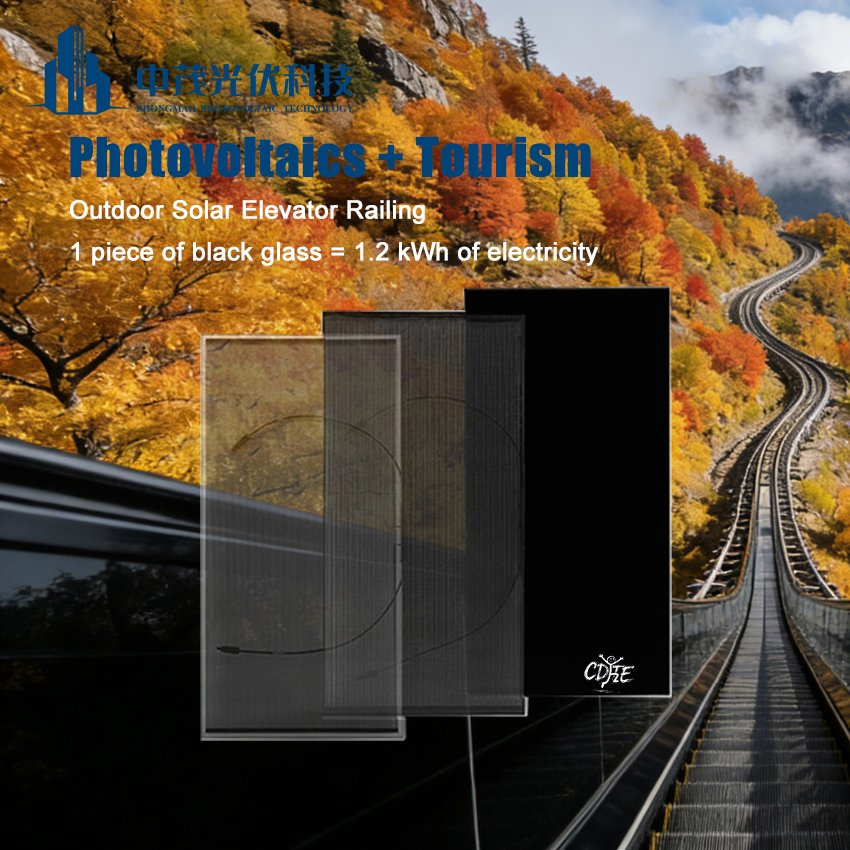
Focusing on Building-Integrated Photovoltaics (BIPV) and consumer electronics, the technology targets diverse applications including centralized/distributed systems, urban renewal, renewable energy vehicles, and satellite antenna systems.