1 / 5
 MGW Glass
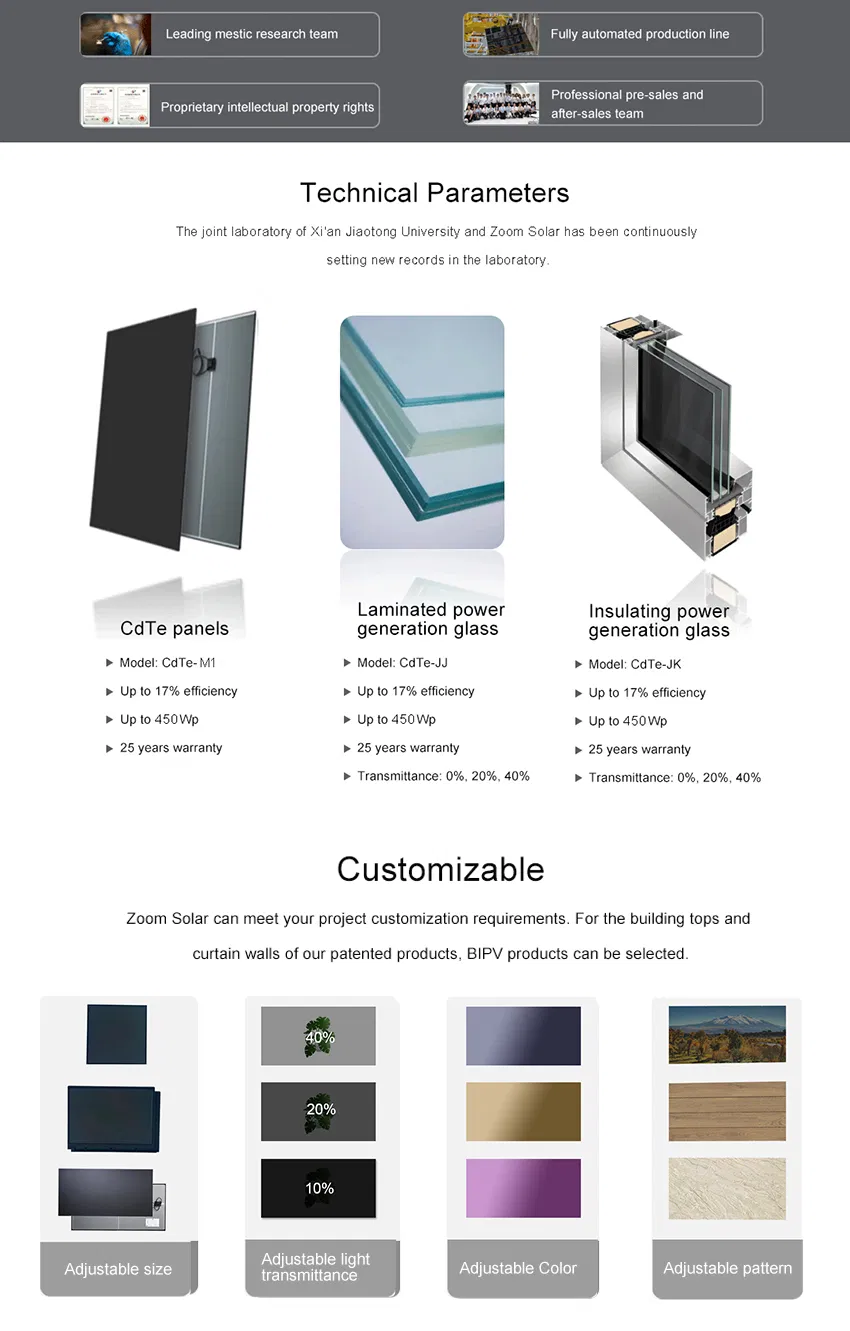
| Specifications | Parameter Range | Applicable Scenarios | Thickness / Transmittance | Power Output |
|---|---|---|---|---|
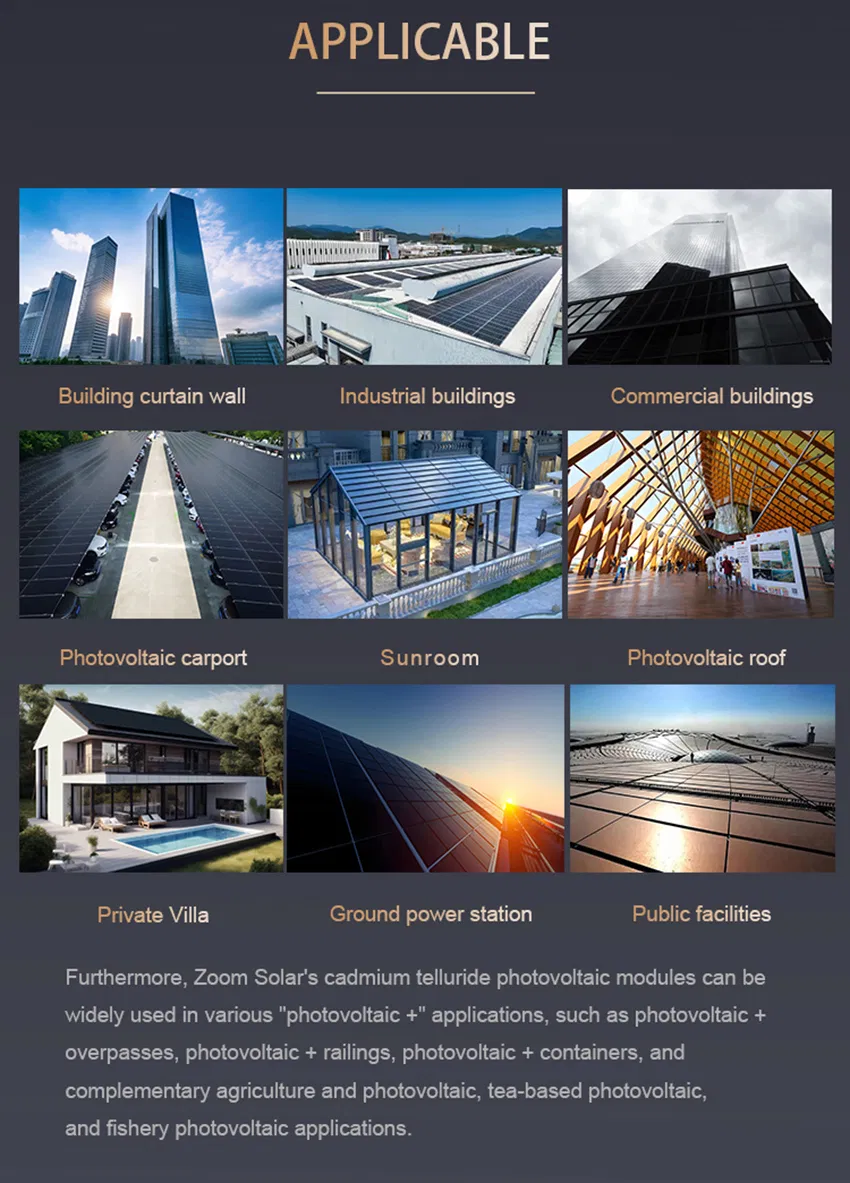
| Home | 1200×600mm/1600×800mm/1200×1600mm | Home Roofs / Balcony Railings | 10-12mm / 10%-60% | 100W-300W/unit |
| Commercial | 2400×1200mm/3000×1500mm/2300×1215mm | Factory Walls / Large-Scale Photovoltaic Power Plants | 22mm / 10%-60% | 500W-1000W/unit |
| Custom | Custom sizes from 1000-4000mm available | Special Building Curtain Walls / Landscape Facilities | 6-20mm / 10%-60% | Calculated by size |
The structure of cadmium telluride thin-film solar cells consists of five layers: glass substrate, transparent conductive oxide layer (TCO layer), cadmium sulfide (CdS) window layer, cadmium telluride (CdTe) absorption layer, back contact layer and back electrode.
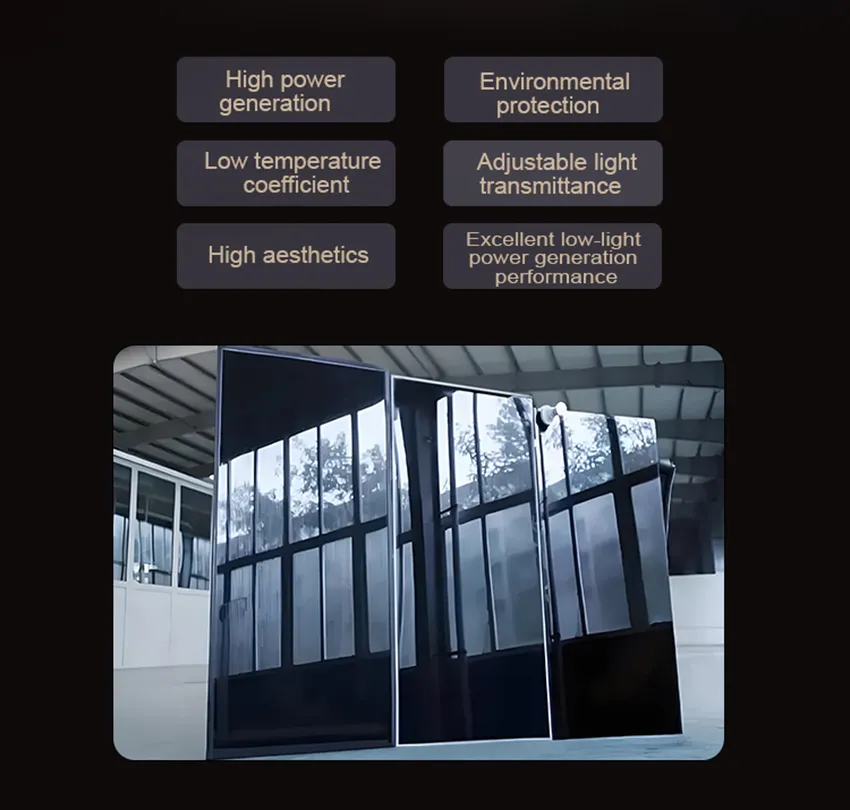
(1) Good weak light performance: CdTe is a direct bandgap material with excellent absorption. Its luminous effect in conditions such as early morning, evening, snow, and haze is significantly better than crystalline silicon cells.
(2) Low temperature coefficient: The temperature coefficient is about -0.21~0.25%/ºC, roughly half that of crystalline silicon. It generates more power in high-temperature environments.
(3) High conversion efficiency: Features a theoretical photoelectric conversion efficiency of approximately 28-29%.
(4) Low cost: Requires thin absorption layer and small amount of raw materials, making it highly competitive for large-scale production.
(5) Power generation stability: No light-induced degradation characteristics; performance remains stable even in humid climates.
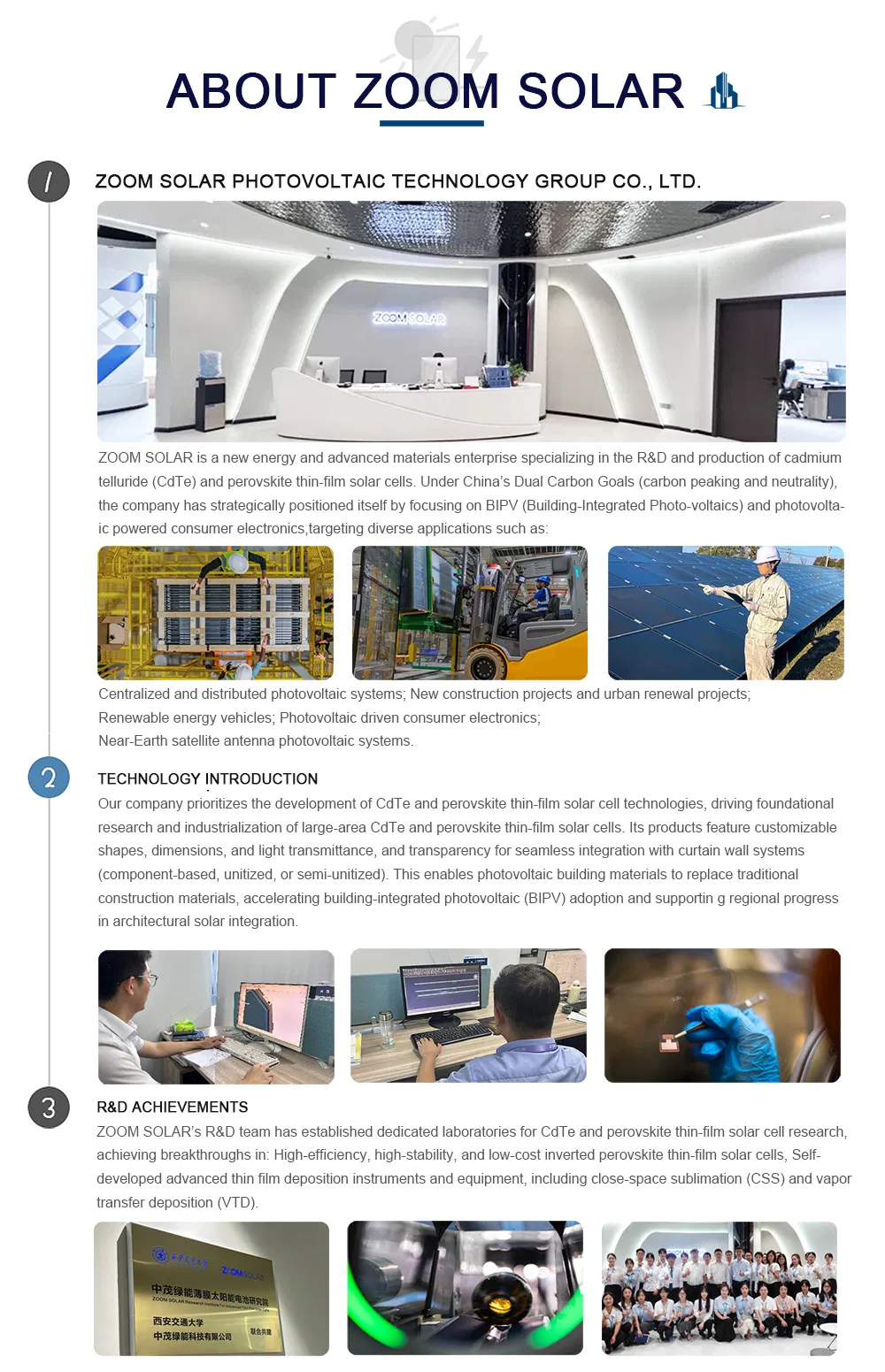
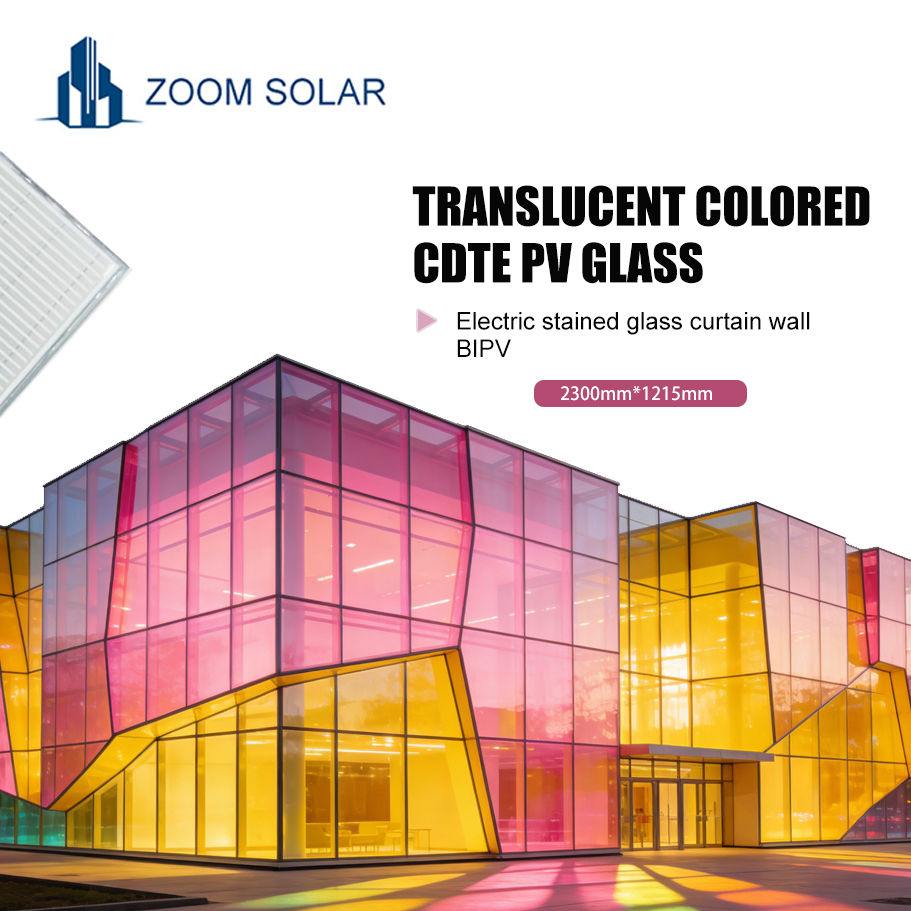
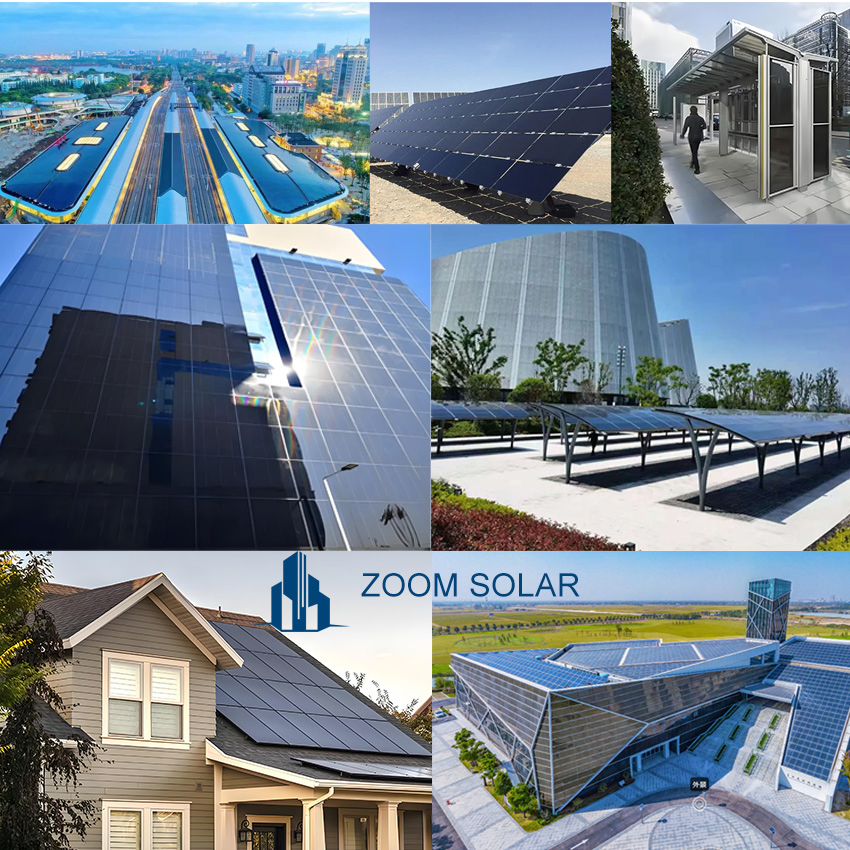
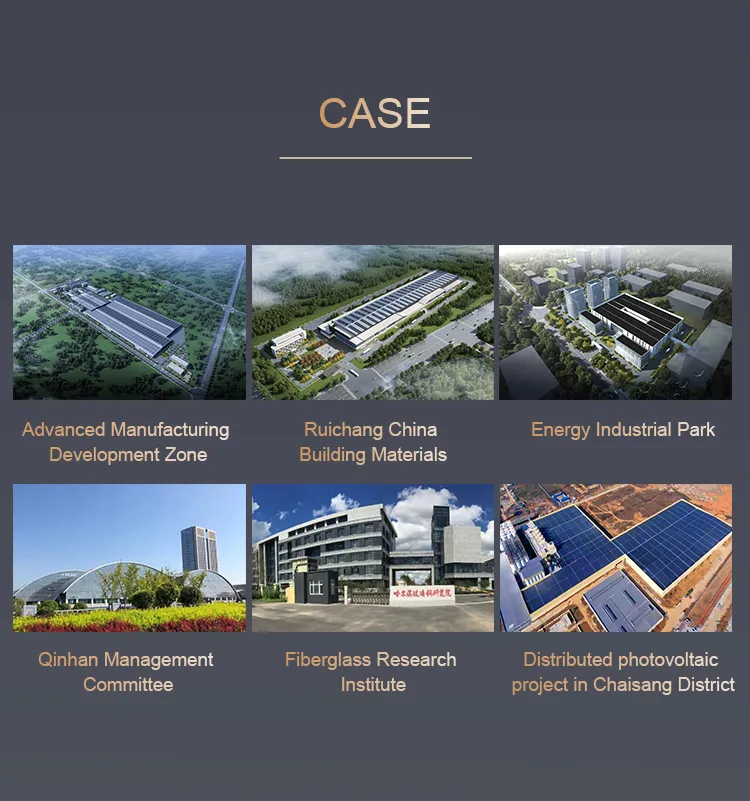
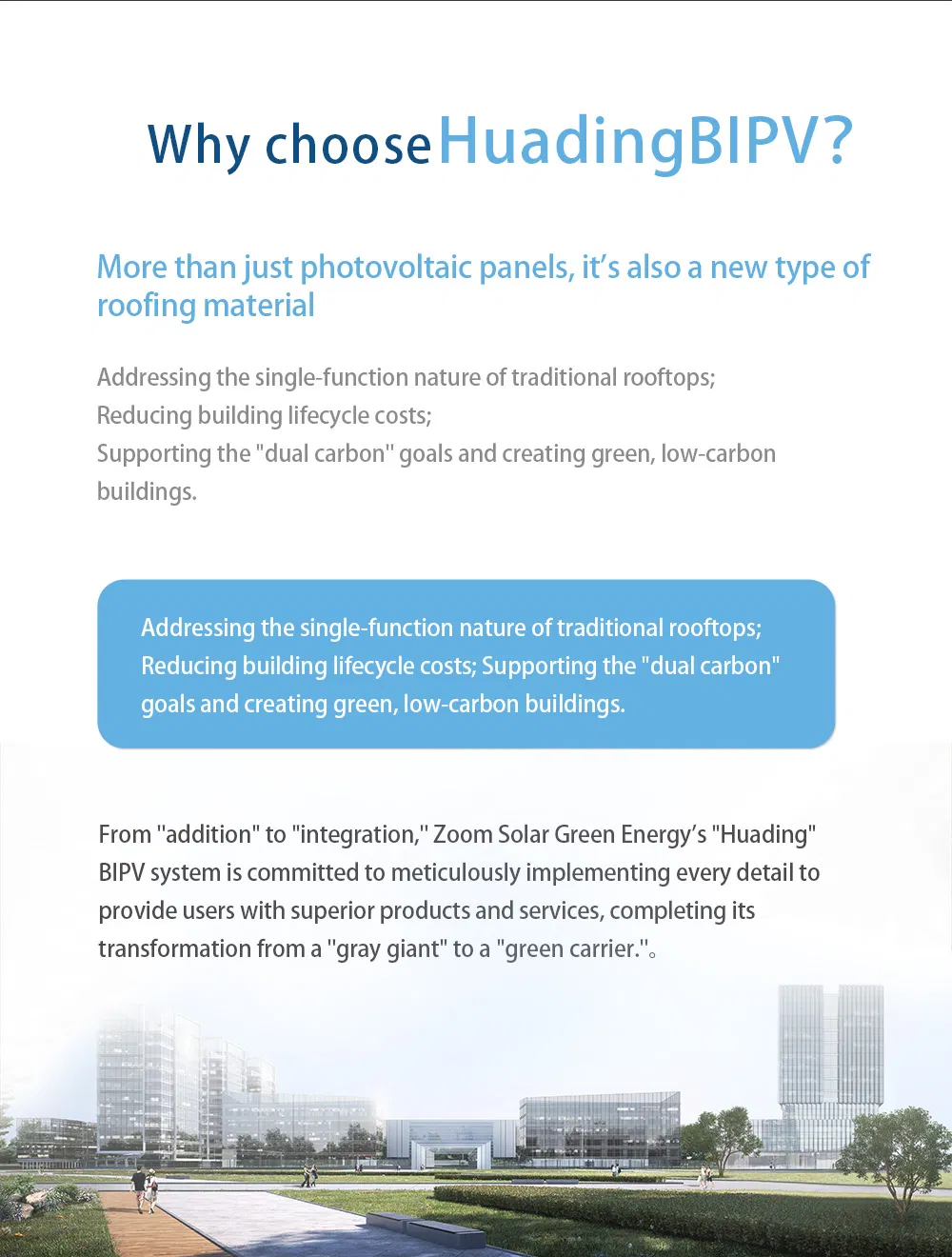
Specializing in the R&D and production of cadmium telluride (CdTe) and perovskite thin-film solar cells. Focusing on BIPV (Building-Integrated Photovoltaics) and photovoltaic-powered consumer electronics. Applications range from centralized/distributed systems and urban renewal to renewable energy vehicles and satellite antenna systems.
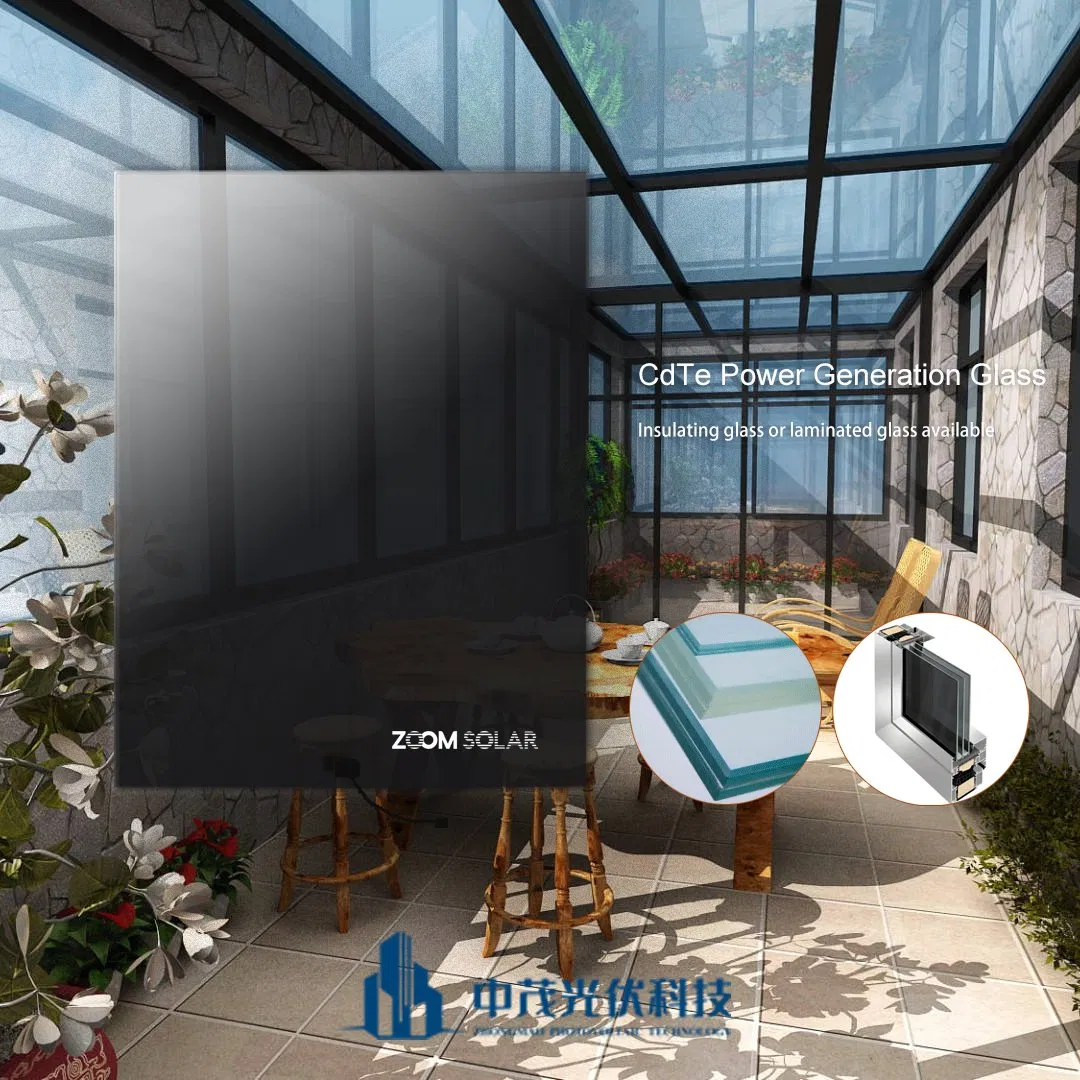
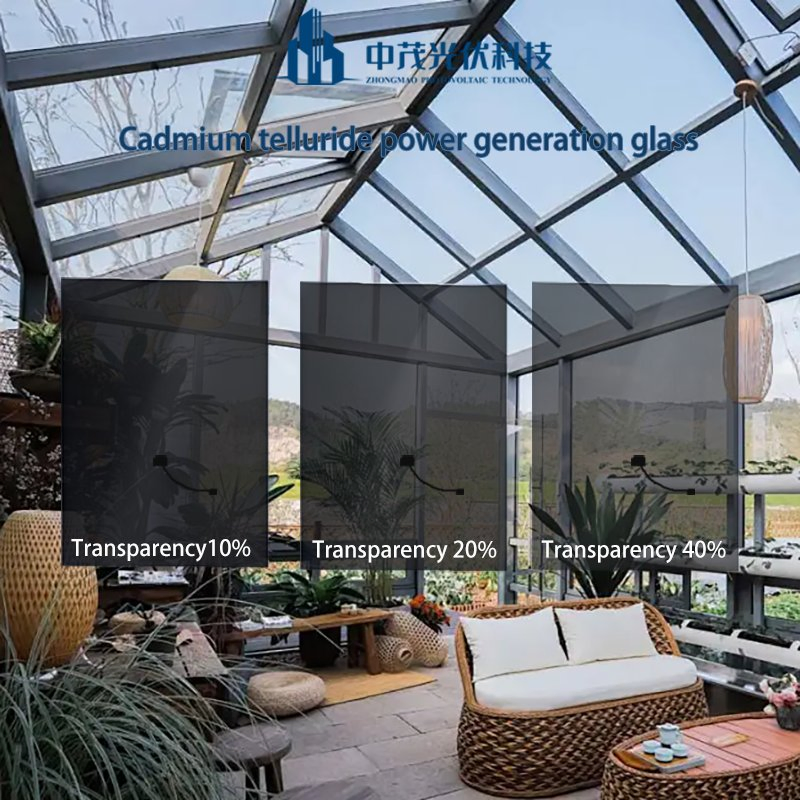
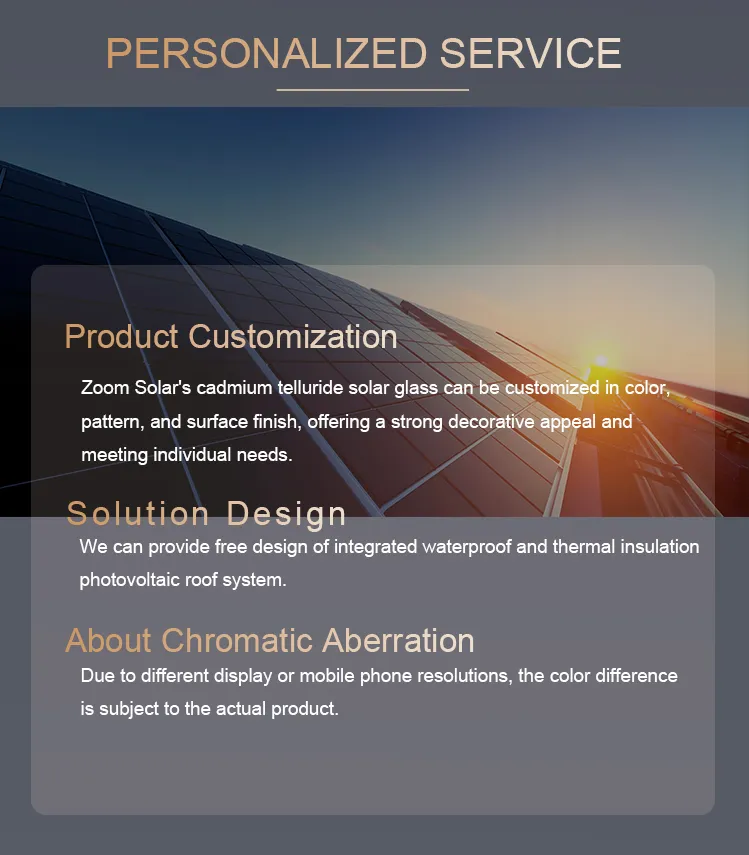
Products feature customizable shapes, dimensions, and light transmittance for seamless integration with curtain wall systems, allowing photovoltaic building materials to replace traditional construction materials.