MGW Glass
MGW Glass
MGW Glass
Expert Solutions for Mbabane Urban Development & Industrial Acoustic Management
As the Kingdom of Eswatini continues to modernize its infrastructure under the National Development Plan, the demand for high-performance architectural materials has surged. From the bustling commercial streets of Mbabane to the expanding industrial parks in Matsapha, noise pollution has become a critical factor in building design. Soundproof laminated glass is no longer a luxury but a fundamental requirement for productivity and health.
In the Eswatini market, developers are increasingly facing the "Urban Acoustic Challenge." The proximity of high-traffic transit corridors to residential and commercial zones requires glazing solutions that can mitigate decibel levels without compromising natural light. Our laminated glass technology provides an STC (Sound Transmission Class) rating that significantly outperforms standard monolithic glass, making it ideal for the Kingdom's evolving architectural landscape.
Optimized for Southern African urban noise, reducing up to 45dB of ambient sound.
Protecting Eswatini's luxury interiors from the intense high-altitude sunlight.
SentryGlas® and PVB interlayers ensure safety even in extreme weather conditions.
The global glass industry is undergoing a digital transformation, and at Shandong MGW Glass Technology Co., Ltd., we lead this shift with our "Factory 4.0" initiative. For our partners in Eswatini, this means unprecedented supply chain resilience and precision. Our manufacturing facility utilizes AI-driven CNC cutting and automated tempering lines that ensure every pane meets rigorous international standards (CE, ISO, SGCC).
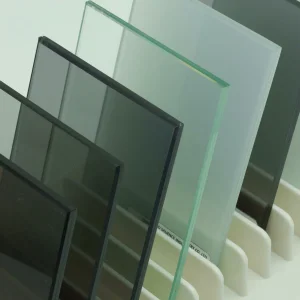
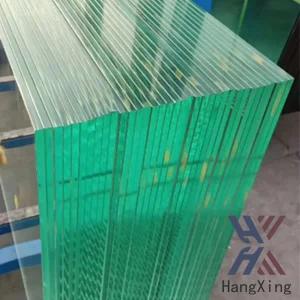
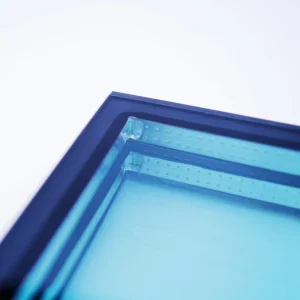
Our acoustic laminated glass is created by bonding two or more layers of glass together with a specialized acoustic PVB (Polyvinyl Butyral) interlayer. This interlayer acts as a dampening core, absorbing sound energy rather than transmitting it. Unlike standard glass, which has a "critical frequency" where sound passes through easily, our laminated products disrupt these frequencies, providing a flat, high-performance acoustic profile across the entire audible spectrum.
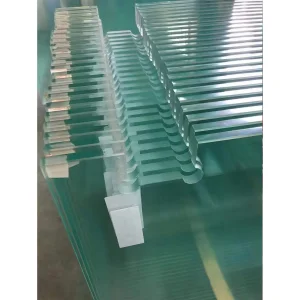
Procuring high-tech glass for the Eswatini market requires a supplier who understands international logistics and local building codes. We provide a seamless "One-Stop Service" that handles everything from custom design to secure sea and land freight into the Kingdom. Our experience in exporting to the Middle East, Europe, and Southeast Asia has refined our packaging systems, ensuring that your glass arrives in Mbabane or Manzini without a single scratch.
Luxury lodges in the Ezulwini Valley utilize our glass to maintain silence for guests while offering panoramic views of the Mdzimba Mountains.
Secure, soundproof glazing for government offices in Mbabane, ensuring confidentiality and a quiet working environment.
Matsapha-based factories use our explosion-proof and soundproof laminates to protect administrative staff from floor noise.
Modern shopping malls in Manzini benefit from our energy-saving Low-E soundproof glass, reducing HVAC costs significantly.
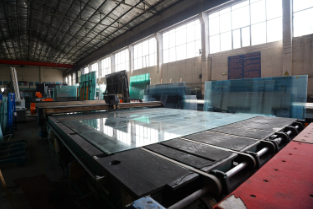
Founded in 1993, MGW Glass has specialized in building glass for more than 32 years. Our commitment to the Eswatini market is backed by a legacy of innovation and quality. We don't just supply glass; we provide engineered solutions that enhance the structural and acoustic performance of your buildings.
Join 200+ global partners who trust MGW Glass for their most demanding architectural challenges. Get expert consultation for your Eswatini project today.
Send Inquiry NowUnderstanding sound transmission is the first step toward effective building design in Eswatini. Sound is essentially energy traveling in waves. When these waves hit a solid object like a window, they cause the material to vibrate. Standard glass vibrates easily at certain frequencies, essentially "leaking" noise into the interior. Laminated glass, through the use of a visco-elastic interlayer, utilizes shear damping. This means the interlayer converts the kinetic energy of the vibration into a small amount of heat, preventing the sound from passing through.
In acoustic engineering, mass is your friend. Heavier glass blocks more sound. However, increasing glass thickness alone has diminishing returns. This is where decoupling comes in. By using two panes of different thicknesses (e.g., 6mm and 4mm) in a laminated or insulated unit, you prevent "resonance," where both panes vibrate at the same frequency. This sophisticated approach is what we offer to high-end residential projects in places like the Tubungu Estates or Siphofane.
Eswatini's climate ranges from the cool Highveld to the hot Lowveld. Soundproof glass from MGW Glass also serves as a thermal barrier. Our Low-E (Low Emissivity) soundproof units reflect long-wave infrared energy (heat) back to its source. In the summer, this keeps the African heat out; in the winter, it keeps the warmth in. This dual-action performance reduces the carbon footprint of buildings in Mbabane and Manzini, aligning with global green building trends.
The manufacturing prowess of China’s Shandong glass hub allows for economies of scale that are passed on to the customer. We utilize high-grade quartz sand and state-of-the-art LiSEC or Bottero processing equipment. For an Eswatini developer, this means receiving a product that is technically superior to local alternatives at a competitive price point, even after accounting for international shipping.
Our commitment to E-E-A-T (Experience, Expertise, Authoritativeness, and Trustworthiness) is evidenced by our 32-year track record. We don't just sell glass; we provide architectural peace of mind. Whether you are building a new corporate headquarters in Mbabane or a private villa in the mountains, our soundproof laminated glass is the definitive choice for quality and performance.