MGW Glass
MGW Glass
MGW Glass
Advanced photovoltaic elements tailored for tropical heat resistance, structural resilience, and architectural elegance.
Surabaya, as the commercial centerpiece of East Java and Indonesia’s second-largest metropolitan hub, is experiencing an aggressive shift toward sustainable urban infrastructure. Driven by national decarbonization mandates—including Indonesia’s target of achieving net-zero emissions by 2060 and local municipal decrees encouraging green building practices (Perwali Surabaya No. 11/2021)—architects, developers, and facade contractors are actively phasing out conventional cladding materials in favor of active energy-generating facades.
However, the microclimatic realities of Surabaya pose severe operational challenges for standard photovoltaic installations. Positioned near 7°15'S latitude, Surabaya experiences high annual global horizontal irradiance (GHI) ranging from 4.8 to 5.3 kWh/m²/day, accompanied by persistent ambient temperatures averaging 32°C to 38°C, relative humidity exceeding 80%, and saline moisture corridors stemming from the Madura Strait. Standard crystalline silicon (c-Si) rooftop panels suffer significant thermal efficiency degradation under these high ambient temperatures due to high negative temperature coefficients (-0.40%/°C).
Cadmium Telluride (CdTe) thin-film BIPV glass possesses a superior temperature coefficient of just -0.21%/°C, retaining structural power conversion yield under extreme Surabaya midday heat where conventional panels falter.
Surabaya’s coastal proximity demands double-laminated, hermetically sealed IP67/IP68 BIPV units that prevent moisture ingress, delamination, and PID (Potential Induced Degradation) under salt-fog exposure.
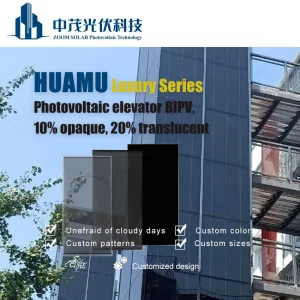
From West Surabaya high-rise towers to Rungkut Industrial Estate (SIER) facilities, customizable VLT (Visible Light Transmittance) and stone/colored aesthetic patterns ensure seamless aesthetic integration.
To capture peak solar yield while reducing building HVAC cooling loads, major architectural developments across West Surabaya (CBD), Mayjend Sungkono, and Tanjung Perak port zone are deploying double-glazed, thermal-insulated Building-Integrated Photovoltaic (BIPV) glass systems. As a world-leading manufacturer with over 32 years of architectural glass processing expertise, Shandong MGW Glass Technology Co., Ltd. supplies Surabaya's engineering firms with tailor-made BIPV solutions built to withstand equatorial winds, intense UV stress, and heavy tropical downpours.
Global developers and procurement entities operating in Southeast Asia face a complex set of commercial and regulatory requirements. BIPV glass is no longer evaluated simply as a renewable energy module; it is fundamentally an envelope-grade structural material that must fulfill structural engineering, fire safety, optical clarity, and energy generation metrics simultaneously.
| Parameter / Feature | Conventional Monocrystalline BIPV | Thin-Film CdTe BIPV Glass | MGW Customized Architectural BIPV |
|---|---|---|---|
| Temperature Coefficient | -0.38% to -0.42% / °C | -0.21% / °C | -0.21% to -0.28% / °C (Optimized for Surabaya) |
| Low-Light & Diffuse Light Yield | Standard (Drops rapidly under cloud cover) | Exceptional (+15% real-world yield) | High Response in Tropical Rainy Seasons |
| Visible Light Transmittance (VLT) | Opaque / Strip Pattern (0% - 15%) | Homogeneous Translucent (10% - 40%) | Custom Tailored (0% to 45% VLT options) |
| Shading & Angle Sensitivity | High Loss under partial facade shading | Minimal Loss (Linear shading degradation) | Multi-bypass Diode / Thin-Film Architecture |
| Structural Safety Ratings | Standard Double Glass | Standard Double Glass | SGCC / CE / ISO Double-Tempered Laminated SGP |
From a global procurement standpoint, achieving financial viability requires minimizing the Levelized Cost of Energy (LCOE) while driving down operational expenditure (OPEX). By integrating Low-E coatings into BIPV hollow-insulated glass units (IGU), our modules reduce Solar Heat Gain Coefficient (SHGC) down to 0.22 while lowering overall building energy demand for HVAC cooling by up to 35% in Surabaya commercial towers.
As structural glazing technology advances, the line between passive building facades and active solar collection continues to dissolve. Shandong MGW Glass Technology Co., Ltd. works at the forefront of BIPV engineering, developing hybrid technologies aimed at maximizing total area generation density.
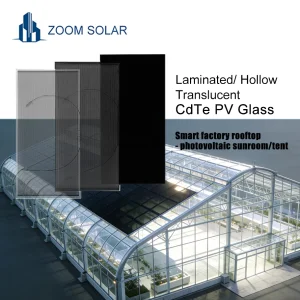
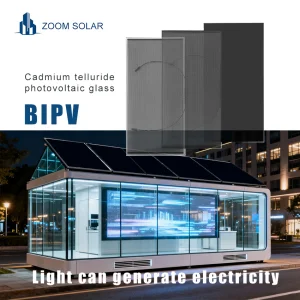
CdTe thin-film semiconductor layers deposited directly on ultra-clear float glass provide a perfectly uniform aesthetic without visible silicon cells or grid lines. With light transmittance levels engineered from 10% to 40%, CdTe is the optimal solution for Surabaya shopping mall atrium roofs, skylights, and transparent elevator shafts where natural daylighting must be harmonized with active solar harvest.
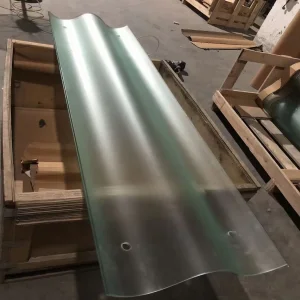
Copper Indium Gallium Selenide (CIGS) thin-film modules allow for curved, flexible solar glass tiles and custom aesthetic prints. Through advanced silk-screen printing and ceramic frit technology, BIPV glass can emulate natural granite, marble, or solid metallic finishes, allowing historic or modern Surabaya architectural facades to generate power while maintaining strict visual design compliance.
Founded in 1993, Shandong MGW Glass Technology Co., Ltd. has spent over three decades establishing itself as a premier global supplier of deep-processed architectural and building-integrated photovoltaic (BIPV) glass.
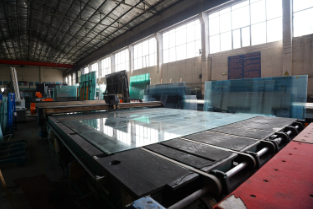
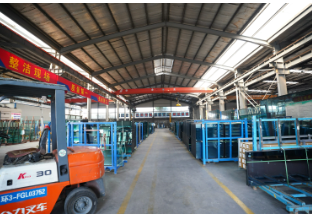
Our company operates high-precision automated processing lines featuring CNC cutting, double-edge grinding, water-jet fabrication, high-stress tempering furnaces, and dual-autoclave PVB/SGP lamination equipment. With over 200 benchmark projects across China and exports reaching Europe, the Americas, the Middle East, and Southeast Asia, MGW Glass offers full structural compliance certified under CE, ISO9001, and SGCC standards.
We supply complete customized architectural glass packages alongside our BIPV systems:
Deploying solar glass in East Java requires strict adherence to regional structural engineering standards and electrical interconnection codes set by PT PLN (Persero). MGW Glass provides comprehensive localized support for facade developers in Surabaya:
Surabaya’s coastal exposure subjects high-rise structures to intense localized wind gusts. MGW BIPV glass panels undergo Finite Element Analysis (FEA) and static load testing up to 4.0 kPa, employing heat-strengthened outer panes and SGP (Sentricglas) structural interlayers to ensure structural integrity under adverse weather conditions.
Industrial dust and pollution from East Java's manufacturing corridors can degrade optical transmission. Our BIPV glass is available with anti-reflective TiO2 nano-coatings that break down organic grime under sunlight, allowing regular tropical rains to wash away dirt and maintain peak electrical output without frequent manual washing.
Equipped with specialized IP68 junction boxes, concealed wiring channels, and MC4-compatible quick connectors, our systems streamline installation for local Surabaya contractors while ensuring compliance with national electrical safety directives.
Explore our certified range of thin-film CdTe, CIGS, translucent curtain wall, and residential solar glass systems.
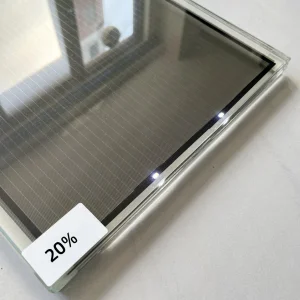
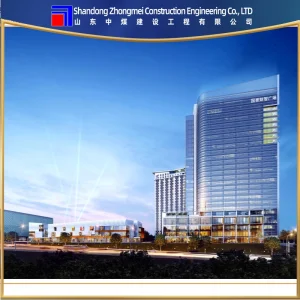
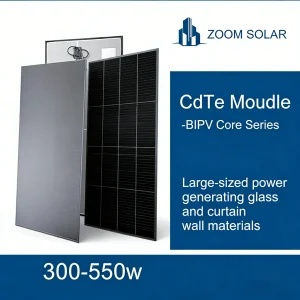
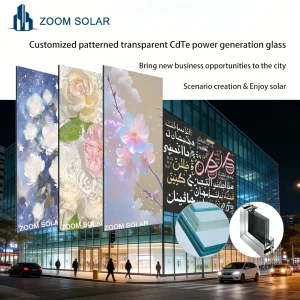
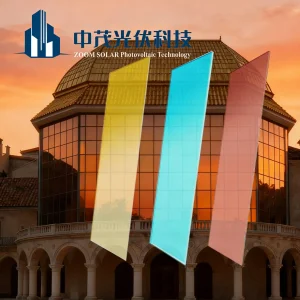
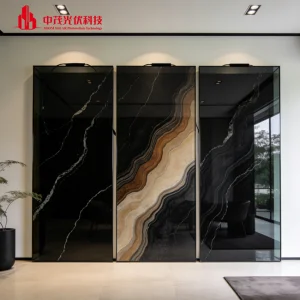
Tailored custom glass units for curved roofs, skylights, and residential developments in Surabaya.
Contact our team of architectural glass engineers to receive customized CAD layout support, electrical generation modeling, and commercial quotes.
Send Inquiry Now