 MGW Glass
MGW Glass
MGW Glass
Custom Engineered Digital Printed & High-Durability Glass Tailored for High-End Equatorial Guinea Projects.
Equatorial Guinea, driven by urbanization in major hubs like Malabo, Bata, and the development of the new administrative city of Oyala (Ciudad de la Paz), is undergoing a major infrastructure transformation. Historically reliant on traditional building materials, modern West African architectural engineering now demands advanced glazing solutions. The expansion of high-end office buildings, civic centers, luxury hotels, and coastal developments has driven a strong demand for high-performance glass.
In this tropical, humid, and coastal environment, standard building materials degrade rapidly. Developers and architects in Equatorial Guinea are shifting toward digital print glass, which combines artistic freedom with high structural integrity. This allows them to create buildings that are both visually striking and resistant to the harsh environment.
As a leading exporter to West Africa, Shandong MGW Glass Technology Co., Ltd. provides customized structural solutions. We combine advanced digital ceramic printing with robust laminated safety properties to ensure buildings stand the test of time, both structurally and aesthetically.
"The shift toward high-performance digital ceramic glass in Equatorial Guinea represents a commitment to permanent structural aesthetics. In coastal zones like Malabo and Bata, where salt spray, extreme UV exposure, and heavy rains are constant, conventional printing quickly fails. High-durability inorganic ceramic ink systems are the only viable path forward."
Furthermore, local safety regulations and international building codes are becoming more aligned. Procurement departments in Equatorial Guinea are looking for manufacturers who can supply glass that meets CE, ISO, and SGCC standards. Working directly with an experienced Chinese manufacturer like Shandong MGW Glass ensures that projects are supplied on time and within budget, with zero compromises on quality.
Why Leading Architects and Developers in Equatorial Guinea Choose Shandong MGW Glass Technology.
Our entire production process complies with European CE (EN12150) and American SGCC standards, ensuring the safety and structural integrity of glass installations in Equatorial Guinea.
We use premium lead-free inorganic ceramic inks that are fused into the glass at temperatures over 650°C. This ensures the design will not fade or scratch, even under direct tropical sun.
We provide full logistical handling from our factory to the Port of Malabo and Port of Bata. This includes heavy-duty ocean-worthy steel-banded wooden crates designed to protect the glass from moisture and shifting during transit.
Constructing commercial and public infrastructure in Equatorial Guinea presents unique challenges. The local climate is characterized by high average temperatures, extreme humidity levels (often exceeding 85%), and high UV exposure due to its equatorial position. Traditional surface-printed glass panels quickly degrade in these conditions, resulting in fading, peeling, and loss of adhesion.
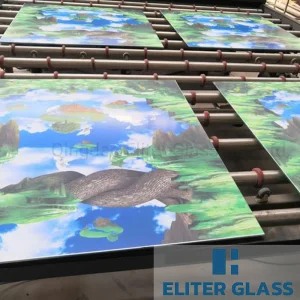
To address this, Shandong MGW Glass Technology Co., Ltd. provides advanced digital ceramic printed glass. During the tempering process, the inorganic ceramic pigments are fused directly into the glass surface. This integrates the design into the glass structure itself, making it highly resistant to UV radiation, moisture, acid rain, and mechanical wear.
By combining ceramic printing with Low-E coatings, our glass helps reduce solar heat gain, which lowers building energy consumption. This structural stability and thermal efficiency makes our products ideal for double-skinned facades in Malabo’s expanding business districts.
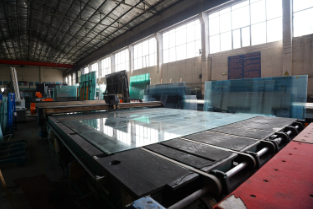
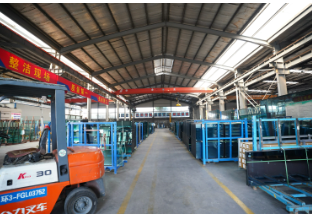
Founded in 1993, Shandong MGW Glass Technology Co., Ltd. has specialized in manufacturing high-performance architectural glass for more than 32 years.
Through continuous innovation, we have built a reputation for high-quality products and reliable project delivery. With over 200 completed major projects in China and a global footprint spanning Europe, the Americas, the Middle East, Southeast Asia, and West Africa, we are equipped to handle large-scale commercial and public developments in Equatorial Guinea.
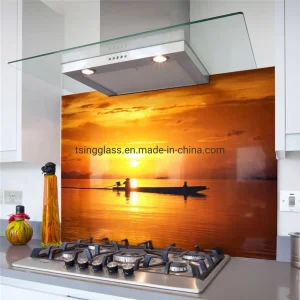
Explore our diverse range of heavy-duty decorative and structural glass systems, designed for both interior and exterior installations.
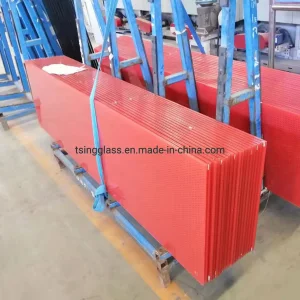
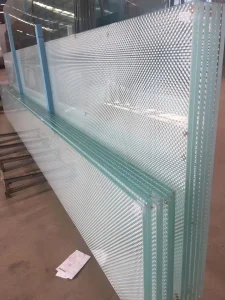
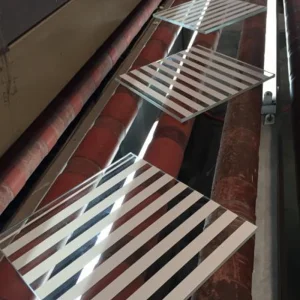
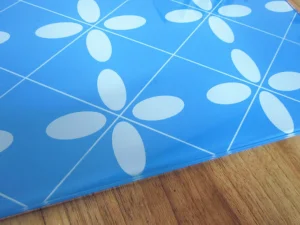
Exporting heavy architectural glass to West African markets requires careful logistical planning, strict manufacturing tolerances, and compliance with local safety standards. Our QA protocols cover every phase of production:
Delivering heavy glass products across the ocean requires highly reliable packaging. We pack all glass shipments in custom wooden crates designed to withstand maritime transit.
Our packaging includes desiccant packets inside plastic wrapping to prevent humidity and moisture buildup, which can cause surface haze. For West African destinations like Malabo and Bata, we offer fully insured CFR and CIF shipping terms, coordinating with international shipping lines to ensure safe and predictable transit.
Technical Answers for Project Managers, Procurement Directors, and Structural Engineers.
Digital ceramic print glass uses inorganic frit pigments that are baked into the glass surface at temperatures above 650°C during tempering. This integrates the design directly into the glass, making it highly resistant to UV fading, scratching, and weather exposure. Standard UV digital print glass relies on organic inks cured on the surface with ultraviolet light. While suitable for interior projects, UV inks can fade and peel when exposed to strong outdoor sunlight, particularly in tropical climates like Equatorial Guinea.
Our digital print glass is tempered to resist thermal stress caused by solar radiation. In coastal, high-sun regions like West Africa, dark printed areas can absorb significant heat. Standard annealed glass can crack under this uneven thermal load. Our tempering process increases the glass's mechanical and thermal resistance, allowing it to withstand temperature differentials of up to 250°C without risk of thermal breakage.
Our architectural glass products are fully certified under leading international standards, including European CE (EN 12150-1, EN 14449), American SGCC (ANSI Z97.1-2015), and ISO 9001 quality management systems. These certifications ensure our glass meets the strict safety and structural standards required by regulatory bodies in Equatorial Guinea and neighboring regions.
Our typical manufacturing lead time for custom printed architectural glass ranges from 15 to 25 days, depending on project complexity and volume. For shipping to West Africa, we work with leading maritime carriers to arrange transport to the Port of Malabo or Port of Bata. Sea transit usually takes between 35 and 45 days. We provide comprehensive tracking, custom documentation, and logistics support to ensure a smooth customs clearance process.
Yes. Digital ceramic print glass can be laminated with PVB/SGP interlayers for enhanced structural safety, or integrated into double-glazed units (IGUs) to improve thermal performance. The printed pattern can be positioned on various surfaces (typically surface #2 or #2/#3 facing the cavity) to optimize both light transmission and solar control, helping to reduce energy costs in air-conditioned environments.
We require high-resolution vector files or raster images in formats such as PDF, EPS, AI, or high-res TIFF. For large architectural facades, we recommend vector files to ensure clear print quality at any scale. Our engineering team review each design to optimize DPI settings, opacity levels, and color values before production begins.
Get in touch with our engineering team for technical support, sample requests, and detailed quotations tailored to your projects in Equatorial Guinea.