MGW Glass
MGW Glass
MGW Glass
Engineered to exceed international thermal performance, safety, and acoustic insulation benchmarks.
How Photochromic Glazing is Reshaping Global Commercial Construction and Sustainable Energy Mandates.
Strict structural energy mandates, such as the EU's Energy Performance of Buildings Directive (EPBD) and the US ASHRAE standards, demand massive reductions in HVAC load. Photochromic glass offers an autonomous, passive solution that limits solar gain on demand without complex electronic actuators.
By absorbing or reflecting intensive near-infrared and UV wavelengths when exposed to intense daylight, our photochromic systems reduce solar heat gain coefficient (SHGC) values dynamically. This cuts peak electrical demand by up to 30% in highly glazed commercial skyscrapers.
Standard architectural glass forces a compromise between natural light and thermal discomfort. Photochromic glass self-modulates visible light transmission (VLT) dynamically, optimizing indoor visual comfort while eliminating harsh glare that hinders office productivity.
A comprehensive breakdown of photokinetic properties, structural configurations, and thermal performance coefficients.
| Performance Metric / Property | Monolithic Configuration | Double Glazed IGU (6mm + 12Argon + 6mm) | Triple Glazed IGU / VIG Hybrid | |
|---|---|---|---|---|
| Visible Light Transmission (VLT) Range | Clear State: ~80% | Darkened State: ~15% | Clear State: ~68% | Darkened State: ~11% | Clear State: ~58% | Darkened State: ~8% | Custom limits via PVB/EVA molecular doping |
| Solar Heat Gain Coefficient (SHGC) | Max: 0.62 | Min: 0.28 | Max: 0.40 | Min: 0.18 | Max: 0.28 | Min: 0.12 | Determines solar heat rejection capacity |
| UV Light Blockage (290 - 380 nm) | > 98% | > 99.5% | > 99.9% | Prevents indoor color fading of fabrics/art |
| Shading Coefficient (SC) Range | 0.72 - 0.32 | 0.46 - 0.21 | 0.32 - 0.14 | Assessed under ASTM E903 standard specs |
| Acoustic Isolation (STC Rating) | 32 - 35 dB | 38 - 42 dB | 44 - 48 dB | Optimized using acoustic PVB laminates |
| Operating Temperature Threshold | -30°C to +80°C (Photokinetic transitions remain stable and uniform across all configurations) | |||
Founded in 1993, Shandong MGW Glass Technology Co., Ltd. has stood at the forefront of high-precision architectural and industrial glass processing for over 32 years. Our state-of-the-art manufacturing plants span across major industrial zones, housing advanced technology designed to convert raw silica into high-performance glazing solutions.
With a portfolio exceeding 200 major projects across mainland China and a robust export operation reaching markets in Europe, America, the Middle East, West Asia, and Southeast Asia, we maintain a flawless compliance record. Our specialized focus on dynamic light control and thermal insulation is backed by a global network of engineers, ensuring seamless system integration.
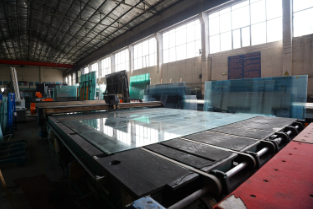
Tailored configurations deployed for specific spatial, climate, and structural needs.
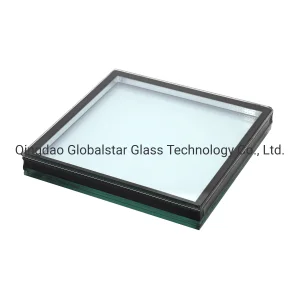
Our photochromic laminates are engineered directly into curtain wall systems. In double or triple glazed unit (IGU) formats, they dynamically control solar heat gain, reducing the overall sizing demand for building chiller systems and supporting LEED and BREEAM certifications.
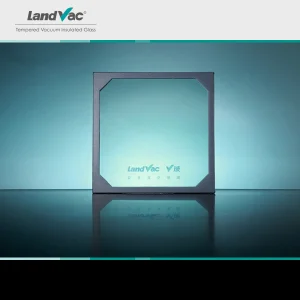
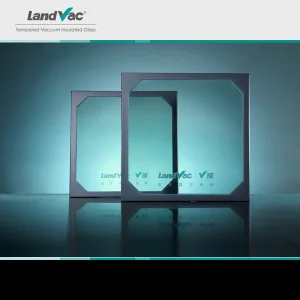
Integrating photochromic layers with low-emissivity (Low-E) insulated and vacuum insulated glass (VIG) prevents winter heat loss while ensuring that hot summer days do not cause indoor overheating. Perfect for zero-emission residential construction.
High-end retail storefronts benefit from maximum transparency on overcast days or in the evening, while the glass automatically darkens under bright sunshine to block damaging ultraviolet radiation, protecting expensive merchandise from sun bleaching.
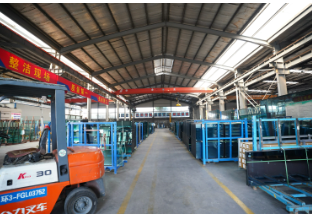
To achieve high visual clarity and durability, all our glass panels undergo precise structural machining. Our production lines feature Italian-imported CNC cutting centers, double-edge grinding machinery, high-pressure water-jet cutters, and horizontal tempering ovens.
Our quality control protocols monitor every step of the process. From testing raw float glass properties to checking the lamination adhesion of photochromic films and checking double-glazed units for moisture, we maintain a strictly audited facility certified to ISO 9001, SGCC (North America), and CE EN 12150 (Europe) specifications.
Engineering the future of smart, energy-harvesting building envelopes.
Integrating photochromic PVB/EVA films with Vacuum Insulated Glass (VIG) panels to achieve U-values under 0.4 W/m²K while maintaining variable solar heat control.
Combining CdTe (Cadmium Telluride) thin-film solar modules with variable photochromic layers to harvest excess solar energy during peak radiation periods while modulating building visibility.
Developing molecularly doped interlayers with narrow spectral transitions, allowing targeted light filtration of specific infrared wavelengths without darkening visible light profiles.
Answering structural questions for glazing contractors, project planners, and building envelope engineers.
Explore our complete range of certified security, solar control, and specialty building glass options.