MGW Glass
Hurricane-resistant glazing is designed to help protect a building when windborne debris strikes and pressure rises during a storm. But “impact-rated” does not describe one universal level of protection. The frame, glass, anchors, and installation all matter. A pane that stays intact is not enough if its frame pulls away from the wall.
So, what are the safety standards for hurricane resistant glazing? In the United States, ASTM E1886 and ASTM E1996 are commonly used to evaluate impact resistance and pressure cycling. Together, these tests assess how a glazing assembly responds to specified debris impacts and repeated positive and negative pressures. ANSI Z97.1 and CPSC 16 CFR Part 1201 address safety glazing and human-impact hazards, which is a related but different concern. Not interchangeable.
Building-code requirements depend on location, building type, exposure, and the code edition adopted by the local authority. Florida approvals and Miami-Dade County product approvals may also apply in certain projects; they are not automatic nationwide requirements. Check the product’s test reports and approval documents, not just a brochure or label. Look for the tested size, frame configuration, anchorage, and permitted installation conditions.
Details can be surprisingly small. A specified fastener, edge clearance, or sealant may affect whether the installed system matches its tested assembly. A licensed design professional or building official can help confirm project-specific wind pressures and applicable requirements. Standards evolve, and paperwork can be hard to interpret. That deserves a second look.
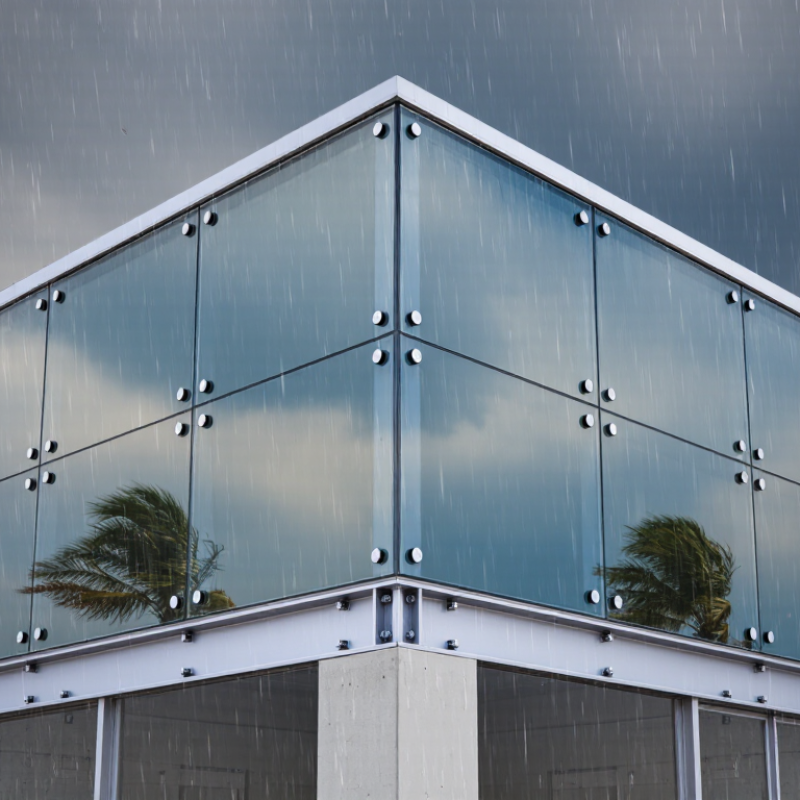
Hurricane-resistant glazing is designed to resist two linked hazards: wind-borne debris and repeated wind pressure. ASTM E1996 specifies missile-impact conditions; one widely used large-missile test fires a 9-pound, 2-by-4-inch timber at 50 feet per second. That is about 34 miles per hour. The exact test level depends on the building’s location and the window’s height.
Impact is only part of the challenge. ASTM E1886 evaluates glazing under repeated pressure cycles after impact, reflecting how hurricane winds can push and pull on a window. A successful assembly must keep the opening protected, including its glass, frame, and connections to the wall. A cracked pane may still perform if it stays in place; broken pieces entering a room are a different outcome. Small details matter.
The pressure target should match the project’s design conditions, not just a generic “hurricane-rated” label. NOAA’s National Hurricane Center classifies Category 3 hurricane winds at 111–129 miles per hour, but that range is not a direct window test rating. Local exposure, building height, and nearby terrain change the forces on each opening. A test label can reassure, yet it cannot answer every site-specific question. Check the tested assembly and installation requirements.
Building codes do not set one universal hurricane-glazing rule. They use a building’s location, risk category, height, and surrounding terrain to establish design wind pressures. A coastal home with large openings may face different demands than a low-rise building inland. The code then determines whether glazing needs impact protection, pressure resistance, or both. Local amendments matter. Code editions differ, too.
In impact zones, officials may require assemblies tested for debris impact and cyclic wind pressure. The glass, frame, anchors, and installation details must work as one system. A strong pane is not enough. Plans may also identify corner zones, where wind suction can be higher. Permit reviews often compare test reports and installation instructions with project-specific pressures.
Tips: Ask the designer or building official which code edition and wind speed apply to your address. Check that documentation covers the exact glass, frame, dimensions, and fastening pattern. Keep installation records. One overlooked screw detail can matter. Requirements can feel confusing; verify them before ordering, since late revisions are frustrating and costly.
Minimum sustained wind speed for each Saffir–Simpson Hurricane Wind Scale category
Hurricane categories describe wind speed, not specific glazing requirements. Building codes determine glazing protection using locally adopted code provisions and site-specific factors, including design wind loads and whether the building is in a windborne-debris region. Wind-speed thresholds shown are from the NOAA National Hurricane Center.
Hurricane-resistant glazing is evaluated for two related hazards: flying debris and wind pressure. ASTM E1886 describes impact and cyclic-pressure testing for exterior windows, doors, and related products. ASTM E1996 defines impact-performance requirements, including missile types and impact conditions. Together, they help determine whether a glazed assembly can resist debris and repeated pressure changes. Small details matter: the tested frame, glass, fasteners, and installation must match the product being specified.
Regional rules may add requirements. In Florida’s High-Velocity Hurricane Zone, the Florida Building Code references specific testing and approval procedures. Miami-Dade County’s protocols include TAS 201 for impact testing, TAS 202 for static pressure, and TAS 203 for cyclic pressure. These tests examine whether an assembly stays intact under repeated loading, not just one strong gust. A glass pane that survives impact can still fail if its frame pulls loose.
Check the locally adopted code edition and the product’s approval documents before choosing glazing. Pressure ratings are tied to design wind loads, building height, exposure, and opening size. They are not universal. I have seen specifications treat “impact-rated” as a complete answer; it is not. Confirm the exact assembly and installation limits. The paperwork can be tedious. Still, skipping it invites costly assumptions.
A product approval is more than a pass-or-fail label. It connects tested performance to the exact window or door configuration proposed for a building. For hurricane-resistant glazing, that record may reference impact testing under ASTM E1886 and E1996, or applicable regional test protocols. It should identify the approved glass, frame, dimensions, hardware, and anchoring method. Details matter.
Reviewers compare the approval’s limits with project requirements, including design pressures, opening size, and the adopted building code. A system tested with one frame or anchor pattern may not qualify when those details change. Approved drawings and installation instructions help contractors match the tested assembly on site. Small substitutions can matter.
Approvals from recognized code jurisdictions can provide useful evidence, but they do not replace project-specific review. Confirm that the approval is current and accepted where the building is located. Check its expiration date, product scope, and installation conditions. Then compare those conditions with the plans and actual rough openings. This step is easy to rush. It is also where a paperwork mismatch can become a field problem, even when the glass itself looks correct.
Hurricane-resistant glazing is only as reliable as its installation. ASTM E1996 includes large-missile testing, commonly using a 9-pound, 2-by-4-inch timber at 50 feet per second. ASTM E1886 evaluates impact and cyclic pressure performance, including sequences totaling 9,000 pressure cycles. Those results apply to the tested assembly, not automatically to every frame, fastener, or wall.
Details matter. Anchors must reach the specified structural substrate, with spacing and embedment matching the approved installation instructions. A neat bead of sealant cannot replace a missing anchor. Shims should support the frame without bowing it, and installers should avoid over-tightening fasteners. Even small distortions can make a sash bind or weaken the seal. NIST’s Hurricane Ike investigation documented how breaches in building envelopes can change internal pressure and contribute to further damage. A passed test is not a promise.
Inspection should check product labels, anchor locations, frame alignment, perimeter sealing, and window operation before finishes conceal the work. Photograph concealed connections. Record deviations and resolve them before sign-off. FEMA’s wind-resistant construction guidance likewise emphasizes following tested assembly details and inspecting connections during construction. Conditions in the field can be messy; inspectors may need to question a detail that looks acceptable but differs from the tested configuration. Local code requirements still govern.
It is tested against wind-borne debris and repeated wind pressure. Both matter.
One common test fires a 9-pound timber at 50 feet per second. The exact test level depends on location and window height.
Not always. The glass may crack but remain in place. Broken pieces entering the room are a different outcome.
No. Category 3 winds are listed at 111–129 miles per hour, but this is not a direct window test rating. Building height, terrain, and local exposure also affect pressure.
It should specify the tested glass, frame, dimensions, hardware, and anchoring method. Small changes may fall outside the approval.
Not necessarily. Compare the approval limits with the project’s pressure needs, opening size, and local code requirements. Check the rough opening too.
Check anchor spacing, embedment, frame alignment, perimeter sealing, and window operation. A neat sealant bead cannot replace a missing anchor.
Photos can record anchors before finishes hide them. Note any differences and resolve them before sign-off. I would check twice.
Hurricane-resistant glazing is designed to help protect buildings from windborne debris, powerful pressure changes, and wind-driven rain during severe storms. The level of protection needed depends on a building’s location, use, and exposure, so applicable building codes determine the required performance. Understanding what are the safety standards for hurricane resistant glazing means looking at both the demands placed on the glass and the way its complete assembly is evaluated.
Impact and pressure testing assess whether glazing can withstand debris strikes and repeated changes in wind pressure while remaining protective. Product approvals provide evidence that a tested system meets the applicable code requirements, but performance also depends on correct installation. Careful inspection can confirm that frames, connections, seals, and surrounding construction are properly fitted and maintained, helping the glazing perform as intended when severe weather occurs.