 MGW Glass
MGW Glass
MGW Glass
Large glass windows brighten homes, offices, and public buildings, but they can become invisible hazards for birds. Reflected trees may look like real habitat. Transparent corners can appear to offer a clear flight path. A sudden impact can leave feathers on the sill, even when no damage is visible.
This guide explains how to prevent birds from hitting large glass windows using practical, evidence-informed methods. Recommendations from bird conservation organizations support exterior window patterns, screens, shutters, and carefully placed decals. External treatments usually work better than indoor decorations because birds encounter the visible barrier before reaching the glass. Closely spaced markings matter. A few widely separated stickers may not be enough.
Small changes can help.
You will learn how to choose effective pattern spacing, where to place bird feeders, and why nighttime lighting deserves attention. You will also see how seasonal behavior changes the risk. Migrating birds may strike windows during dawn, storms, or overcast weather. Local species can respond differently, so observation remains important.
No single solution works everywhere. A window that seems safe in spring may become dangerous after nearby landscaping changes. Some products are marketed confidently but lack strong independent testing. That uncertainty deserves honesty. Check the glass from several angles, record repeated impacts, and adjust the treatment when needed. Protecting birds is not only about installing a product. It requires noticing reflections, flight paths, weather, and the living environment around the building.
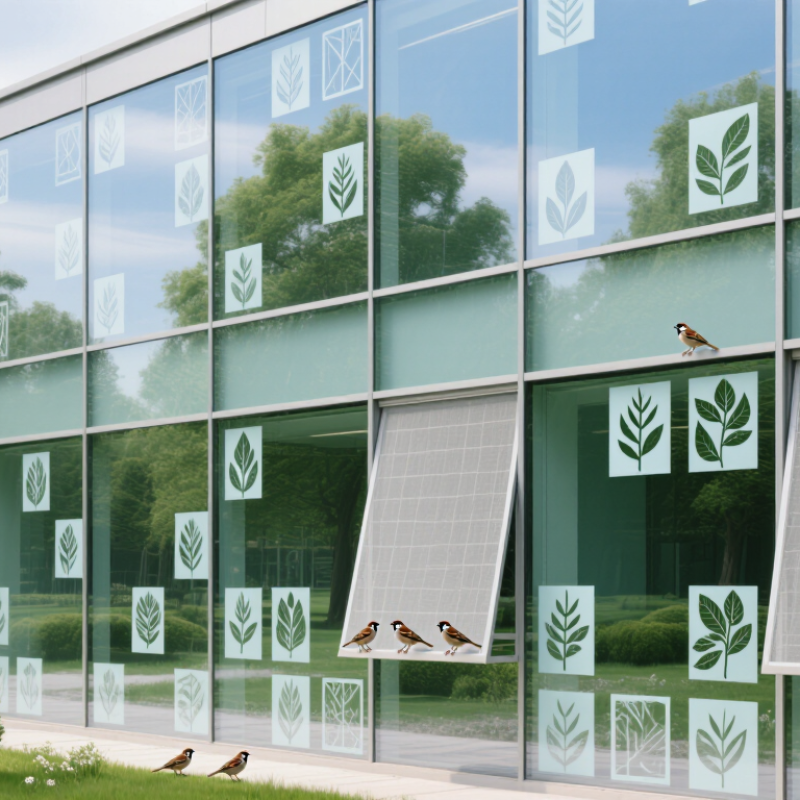
Large glass windows can look invisible to birds. They reflect trees, clouds, and open sky with surprising accuracy. Some also create a false passage between indoor and outdoor spaces. Birds do not understand glass as a solid barrier. They respond to familiar habitat cues instead.
A peer-reviewed estimate published in The Condor: Ornithological Applications placed annual bird deaths from building collisions between 365 million and 988 million in the United States. The estimate includes homes, offices, and other structures. Large buildings attract attention, but low-rise windows may cause more deaths because they are far more common. During window assessments, practitioners often find feathers beneath quiet glass walls. That evidence is easy to miss after rain or cleaning.
Night lighting adds another problem. Migrating birds can become disoriented around illuminated facades, especially during poor weather. Reflections then increase daytime strikes. Effective prevention must address both surfaces and lighting. External screens, dense visual patterns, and properly spaced decals can break the false image of continuous habitat. Patterns need close spacing, not a few widely separated shapes. Guidance commonly recommends gaps of about five centimeters, though facade design still matters. Interior decorations may not help much; reflections remain outside the glass.
There is no perfect fix. A solution that works on one elevation may fail on another. That is uncomfortable, but important. Monitoring collision evidence before and after treatment provides more reliable results than appearance alone. When possible, reduce unnecessary nighttime lighting and close blinds during migration peaks. Small changes can matter. Sometimes, however, the design needs rethinking.
| Risk Factor or Window Condition | Why Birds Strike the Glass | Typical Risk Level | Recommended Prevention Method | Practical Specification | Expected Benefit |
|---|---|---|---|---|---|
| Strong reflection of trees, sky, or vegetation | Birds may interpret reflected outdoor scenery as open habitat and fly toward it. | High | Apply a visible exterior pattern, install an exterior screen, or use permanent bird-safe glazing. | Place visual markers on the outside surface; exterior treatments are generally more visible than interior decals. | Breaks up the continuous reflection and makes the window recognizable as a physical barrier. |
| Clear glass aligned with plants, courtyards, or another window | Birds can see an apparent flight path through the building or toward attractive habitat beyond the glass. | High | Use patterned film, exterior mesh, shades, blinds, or bird-friendly replacement glass. | Cover the full hazardous pane rather than treating only the center or corners. | Reduces the illusion of a passageway and limits direct flight trajectories. |
| Large uninterrupted panes | Broad, featureless surfaces provide few visual cues that a solid wall is present. | High | Create a dense, continuous visual pattern across the pane. | A commonly used bird-safe layout is a pattern with gaps no larger than 2 inches (5 cm) in both directions. | Provides repeated warning cues within the distance at which many small birds can react. |
| Windows near feeders, water, or nesting habitat | Bird activity is concentrated near resources, increasing the number of flight movements close to glass. | High | Move feeders and birdbaths either very close to the window or well away from it, and treat the window. | Place resources within about 3 feet (0.9 m) of the window or more than 30 feet (9 m) away. | Close placement limits flight speed; distant placement reduces frequent window-level activity. |
| Nighttime lighting visible through or reflected by glass | Artificial light can attract or disorient migrating birds, especially during poor visibility and migration periods. | Moderate to high | Turn off unnecessary lights, close blinds, and use automatic controls during nighttime migration. | Prioritize upper floors, perimeter rooms, atriums, and brightly lit spaces. | Reduces attraction, disorientation, and prolonged flight near illuminated windows. |
| Interior decals placed behind reflective glass | Interior decals may be obscured by reflections and may not provide a clear warning from the bird’s approach angle. | Moderate | Replace or supplement interior decals with exterior markers or exterior screens. | Use a continuous exterior pattern with gaps no larger than 2 inches (5 cm). | Improves contrast and visibility under changing daylight conditions. |
| Exterior insect screens or lightweight netting | A screen creates a visible buffer and can absorb or deflect a bird before it reaches the glass. | Lower after installation | Install a taut, durable screen in front of the entire window. | Keep the screen separated from the glass so it can flex safely and remain clearly visible. | Reduces direct impact and also interrupts reflections. |
| Glass with permanent visual patterning | Fritted, etched, ceramic-patterned, or otherwise textured glass can reduce transparency and reflection. | Lower when properly designed | Specify bird-friendly glazing during new construction or window replacement. | Use a dense, consistent pattern across the complete pane; avoid large untreated sections. | Provides a durable solution without relying on temporary stickers or seasonal maintenance. |
| Corner windows and glass connecting two façades | Reflections and apparent sightlines can create the impression of a continuous flight corridor. | High | Treat both adjoining panes and add external shading or screening where appropriate. | Continue the visual pattern around the corner so birds do not encounter an untreated gap. | Removes misleading visual continuity across multiple glass surfaces. |
| Repeated collisions or stunned birds found below a window | Previous impacts identify a location where the glass is functioning as a recurring collision hazard. | High | Install a full-coverage exterior treatment immediately and inspect the area regularly. | Record the window, time, weather, and species when possible; prioritize treatment of the most active pane. | Allows targeted action and helps verify whether collisions decline after treatment. |
| Seasonal migration and spring territorial activity | Bird movement and window exposure can increase during migration and breeding seasons. | Moderate to high | Keep permanent treatments in place and use nighttime lighting controls throughout the year. | Do not remove visual markers after a short collision-free period. | Maintains protection during changing migration routes, weather, and local bird activity. |
Birds may see reflected trees, clouds, or sky instead of a solid barrier. Some panes look like open flight paths. Glass becomes visually absent.
Examine panes facing mature trees, corner windows, glass doors, and narrow side sections. Low-rise windows also matter because they are common. I once missed a small pane. Repeated marks proved it mattered.
Morning and late afternoon can bring stronger reflections. Migration seasons may increase activity. Poor weather and nighttime lighting can disorient migrating birds. Check after bright, calm weather too.
Look for feathers, oily body marks, or stunned birds beneath frames. Record the pane, time, weather, and flight direction. Rain and cleaning can erase clues. One strike can mislead you.
Close sheer curtains during bright morning hours when trees reflect strongly. Move plants, baskets, and decorative branches away from glass. Interior changes may not remove outside reflections. Test them anyway.
Place it very close to the window or well away, not at middle distance. A middle position can let birds build speed. Placement depends on angle. Observe before deciding.
Use external screens or closely spaced visual patterns across the full problem area. Gaps around five centimeters are commonly recommended. A few widely separated decals may fail. Cover corners and lower sections.
Monitor collisions for several days before and after each change. Compare the same pane, time, and weather conditions. Results matter more than appearance. A solution may work on one elevation and fail elsewhere.
Unnecessary nighttime lighting can disorient migrating birds near illuminated facades. Reduce lighting when practical, especially during migration peaks. Close blinds as well. Small changes matter. Sometimes, redesign is needed.
Large glass windows can be dangerous for birds because they reflect trees, sky, and open space, making the surface appear invisible. To understand how to prevent birds from hitting large glass windows, begin by observing where collisions occur, when they happen, and which windows reflect vegetation or bright outdoor areas. High-risk locations often include tall, corner, or uninterrupted panes near gardens, feeders, and nesting habitats. Recording collision patterns can help prioritize the most effective changes.
Exterior visual markers, such as evenly spaced dots, lines, or other visible patterns, can break up reflections and help birds recognize the glass as a solid barrier. Interior improvements may also help by reducing nighttime lighting, moving plants away from windows, and adjusting blinds to limit confusing reflections. Continue monitoring the windows after making changes, replace faded or damaged markers, and review seasonal patterns to maintain long-term bird safety.
