MGW Glass
One-way mirror glass can make a bright exterior look reflective while keeping a darker room less visible. The effect depends on lighting, not on a permanent, one-sided barrier. When evening lights brighten the room, the reflection can reverse. People outside may see in. That detail matters.
The U.S. Department of Energy’s Energy Saver guidance estimates that windows account for about 25%–30% of residential heating and cooling energy use. That figure concerns energy, not privacy, but it shows why glass selection should consider more than appearance. The National Fenestration Rating Council’s product labels provide measures such as visible transmittance and solar heat gain coefficient. These ratings help compare daylight and solar performance; they do not guarantee privacy. For anyone asking how to achieve maximum privacy with one-way mirror glass, the practical answer starts with a strong outdoor-to-indoor brightness difference, suitable glass specifications, and a plan for nighttime coverage. Test a sample against the actual room lighting. Check it from outside, too. A showroom sample can mislead. So can a sunny afternoon. Curtains or blinds may still be needed after dark, and reflective glass can reduce the daylight a room receives. Those trade-offs are easy to overlook. A careful choice balances privacy, visibility, comfort, and the building’s real conditions rather than relying on the “one-way” label alone.
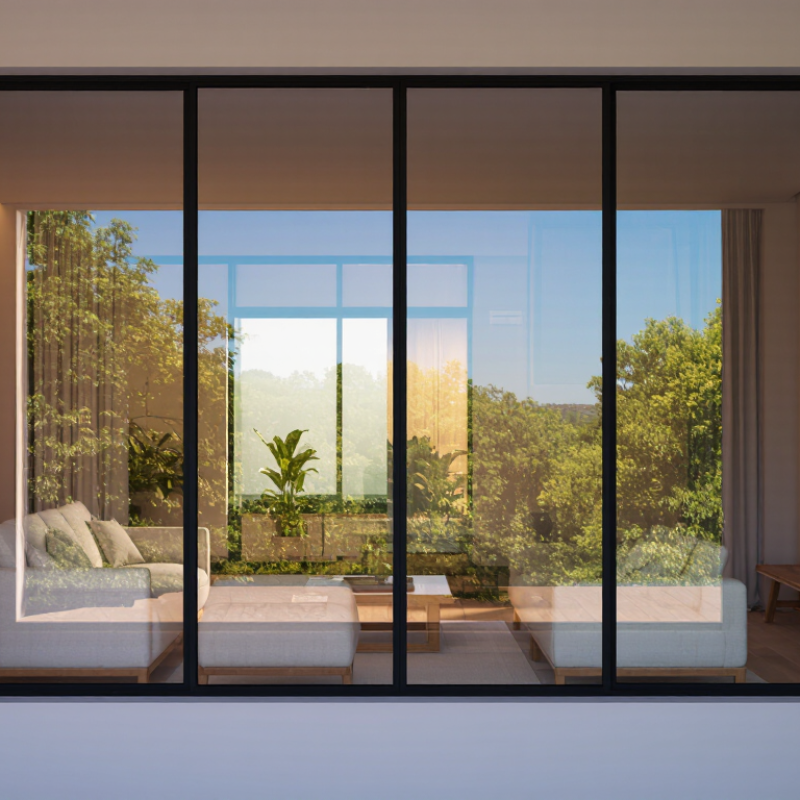
One-way mirror glass is not opaque glass. Its coating reflects some light and transmits some, so privacy depends on which side is brighter. The brighter side mostly sees its own reflection; someone on the darker side may see through the glass. Light does the work.
In daytime, a sunlit exterior and a shaded room often create the needed contrast. From indoors, the window may look like a mirror, while someone outside sees more of the room. Keep nearby lamps away from the glass, since bright reflections can reduce visibility and reveal details. Small changes matter. A pale wall or glossy tabletop near the window can bounce light toward the pane.
After sunset, the balance can reverse. A lit room may become visible from a darker exterior, even when the glass still looks reflective indoors. This is the limitation people sometimes miss. Turn down interior lighting, use layered window coverings, or add exterior lighting where appropriate. Check the view from both sides at different times; a quick test at noon is not enough. Results also vary with the glass, viewing angle, and nearby light sources, so treat the privacy as conditional rather than guaranteed.
Daytime privacy with one-way mirror glass depends on which side is brighter. A common rule of thumb is a 5:1 lighting ratio: the exterior should receive about five times more light than the interior. The brighter side appears reflective, while the darker side is easier to see through. That matters.
Check conditions near the glass, not just the room’s ceiling lights. A handheld lux meter can compare readings on both sides. For example, if the outdoor reading is 1,000 lux, aim for roughly 200 lux indoors. Keep the room’s lights low, especially near windows. A bright desk lamp can weaken privacy, even on a sunny afternoon.
Treat five-to-one as a guideline, not a promise. Cloud cover, deep window recesses, viewing angles, and nearby shadows can change the effect. I would check the glass from outside at several times of day; one quick test may miss a problem. At night, the balance often reverses when indoor lights are on, so the room may become visible from outside. No single ratio replaces checking the actual setting.
When comparing one-way mirror glass, read visible light transmission and exterior reflectance together. VLT is the share of visible light that passes through the glass. A lower VLT often means less daylight enters, so the room may feel dimmer. Exterior reflectance measures how much light the outside surface reflects. Higher reflectance can strengthen the mirror-like appearance, but it cannot guarantee privacy on its own.
Imagine two samples: one has 20% VLT and 30% exterior reflectance; another has 10% VLT and 40% exterior reflectance. The second may look more reflective outside, but it will also admit less light. Check whether the sheet lists exterior reflectance separately from interior reflectance. Those figures describe different sides of the glass. Small details matter.
The effect depends on the light balance. In daylight, a bright exterior and darker interior usually support the mirror effect. At night, interior lights can reverse that balance, making the room easier to see into. That matters. Compare the figures under the same testing conditions, then view a sample from both sides near a window. A spec sheet can feel reassuring; I still would not choose by numbers alone. Test it at dusk. Also consider whether nearby trees, lamps, or pale walls change the reflections around your actual window.
One-way mirror glass works through contrast: the brighter side appears reflective, while people on the darker side can see through it. That balance changes as daylight shifts. A window that offers privacy at noon may reveal a room after sunset if interior lights are brighter than the outdoors. Light decides everything.
Choose glass for the actual conditions around the opening, not just its appearance in a showroom. Consider visible-light reflectance, tint, and how much daylight the room needs. A darker tint can reduce glare, but it may also make an interior feel dim. Check the view from both sides, and test a sample near the window during morning, afternoon, and evening hours. Test it at dusk. That’s when assumptions often fail.
Installation matters just as much. Position reflective glass toward the brighter side, and note where exterior lamps, signs, or bright walls may affect the contrast. For nighttime privacy, plan for curtains or blinds; mirror glass alone cannot guarantee it when the room is brightly lit. Also check the frame and edges for gaps that could create unwanted sightlines. Site lighting is rarely perfectly consistent, so review the setup again after nearby fixtures are switched on.
Choose the glass and installation to match your site’s lighting conditions.
One-way mirror glass works best when the viewer’s side is brighter than the protected side. These illustrative planning values show why daytime conditions may favor privacy while nighttime lighting can reverse the effect. Measure both sides at your site; when the protected side is brighter, use blinds or curtains for dependable privacy. Actual results vary with the glass and installation.
Illustrative illuminance values in lux—not site measurements or guaranteed privacy thresholds.
One-way mirror glass depends on a brightness difference, not on a permanent one-way view. In daylight, the brighter outdoors reflects more light, making the glass appear mirror-like from outside. After sunset, a lit room can become brighter than the dark exterior. The effect may reverse, revealing silhouettes and indoor details. That changes everything. A daytime sample can look convincing, and that is exactly where planning can go wrong.
Plan for the darkest hours, not just sunny afternoons. Close curtains or blinds at night, especially in bedrooms and street-facing rooms. Exterior lighting may help maintain a brighter outdoor surface, but it will not guarantee privacy in every condition. Test a sample after dark with the room lights on; check it from several angles and distances. The U.S. Department of Energy’s Energy Saver guidance estimates that windows account for 25–30% of residential heating and cooling energy use. That figure concerns energy, not privacy, but it is a useful reminder: glazing choices affect more than appearance. Reflective products can also alter glare and solar heat gain, so check visible-light and solar-performance ratings before choosing. The honest limitation is simple: mirror glass alone cannot promise nighttime privacy.
The brighter side usually looks reflective, while the darker side is easier to see through. Light balance matters.
It is a rough guide: exterior light may be five times stronger than indoor light. For example, 1,000 lux outside and 200 lux inside. It is not a guarantee.
Compare readings beside the glass with a handheld lux meter, not just ceiling lights. A bright desk lamp can weaken privacy.
VLT shows how much visible light passes through the glass. Lower VLT can reduce daylight, leaving a room dimmer.
No. It may create a stronger reflective appearance, but the light balance still matters. Check exterior and interior reflectance separately.
Indoor lights may make the room brighter than outside, reversing the daytime effect. The room could become visible from outdoors.
Yes. Cloud cover, window recesses, viewing angles, shadows, pale walls, and nearby lamps can all affect reflections.
Compare their figures under the same test conditions, then view each sample from both sides near a window. Check it at dusk, too. I would not rely on one quick test.
One-way mirror glass creates privacy by reflecting more light than it transmits, so people on the brighter side see a reflective surface while those on the darker side can see through it. For daytime privacy, the lighting difference matters more than the glass alone. A common guideline is to keep the exterior around five times brighter than the interior, but this is only a starting point; changing weather, shade, and indoor lighting can affect the result.
To decide how to achieve maximum privacy with one-way mirror glass, compare visible light transmission and exterior reflectance on product specifications, then choose glass and placement that suit the site’s actual lighting conditions. Consider window orientation, nearby buildings, and how much daylight enters the room. Plan for nighttime as well: when interior lights make the room brighter than the outside, the mirror effect can reverse. Curtains, blinds, or other privacy measures can help maintain privacy after dark.
