When discussing safety in glass products, the terms "laminated" and "tempered" reflect distinct characteristics. Dr. Emily Thornton, a renowned glass safety expert, emphasizes this difference, stating, "Understanding the types of glass is crucial for ensuring safety in construction and design."
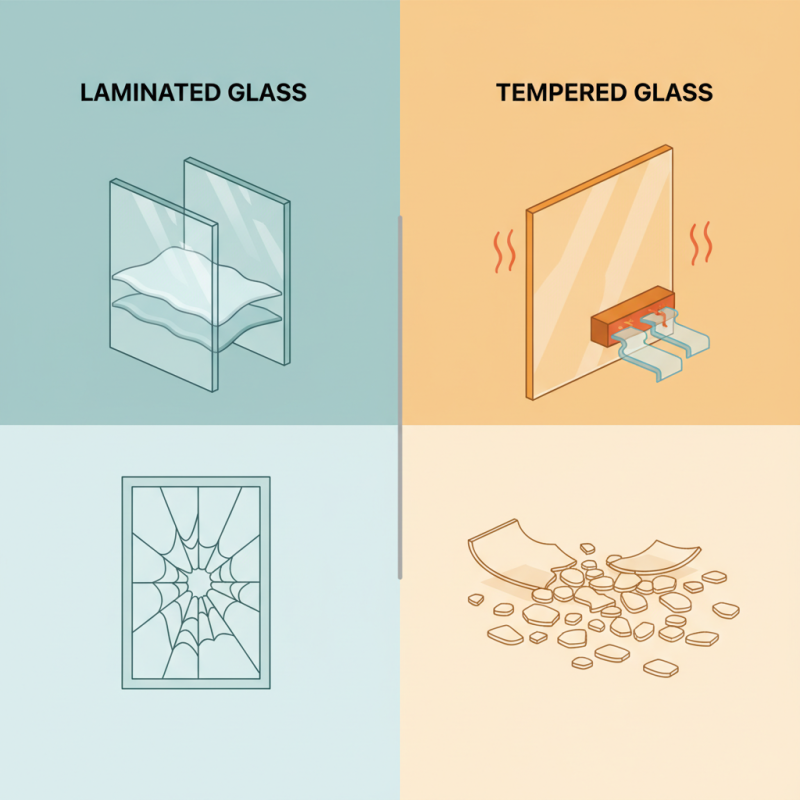
What is the difference between laminated and tempered glass in safety? Laminated glass consists of layers of glass bonded together with a plastic interlayer. This construction allows it to hold together when shattered, preventing dangerous shards. It is often used in areas requiring high safety standards. Conversely, tempered glass undergoes a heating and cooling process that increases its strength. However, when broken, it shatters into small, blunt pieces, which reduces the risk of severe injuries.
Both types have unique benefits. However, choosing the right one can be complex. Laminated glass offers better protection against intrusion and offers sound insulation. Tempered glass is more suitable for high-impact scenarios like shower doors. Reflecting on safety standards can sometimes leave professionals debating which option is superior. There's no definitive answer, as each serves a specific purpose. Understanding these differences aids in making informed decisions for safety applications.
Understanding Laminated Glass: Composition and Features
Laminated glass is a unique product, primarily composed of two or more glass layers. These layers are bonded together with a durable interlayer, usually made of polyvinyl butyral (PVB). This composition enhances the glass's strength and safety. When broken, laminated glass holds together, preventing shards from causing injury.
The features of laminated glass make it suitable for various applications. For example, it provides sound insulation and UV protection. Many automotive and architectural designs utilize it for safety. However, while it excels in these aspects, some may overlook its weight. Laminated glass can be heavier than standard glass, which may require additional structural support.
Another consideration is the cost. Laminated glass is often more expensive than traditional glass. Some might question if the added safety and performance are worth the investment. Understanding these trade-offs can help in making informed decisions. Overall, laminated glass is a reliable choice for safety-conscious consumers and professionals alike.
Exploring Tempered Glass: Properties and Manufacturing Process
Tempered glass is known for its strength and safety. The manufacturing process involves heating the glass to around 620 degrees Celsius. Rapid cooling follows, creating a compressive stress on the surface. This process makes tempered glass much stronger than regular glass. It can withstand sudden impacts and thermal stresses, making it ideal for various applications.
However, tempered glass is not infallible. When broken, it shatters into small, blunt pieces. This reduces the risk of injury, but it can pose a challenge during installation. If not handled correctly, the glass may crack before it's even installed. Furthermore, tempered glass cannot be cut after production, limiting customization options.
In contrast, laminated glass consists of layers of glass bonded with a plastic interlayer. This design keeps shards intact if broken. Each type of glass serves distinct needs. While tempered glass excels in strength, laminated glass offers better safety in human-centric designs. Understanding these differences is crucial for selecting the right glass for your project.
Safety Aspects of Laminated Glass: Benefits and Applications
Laminated glass is renowned for its safety features. It consists of two or more layers of glass, bonded together with a plastic interlayer. This design helps prevent shattering. In the case of breakage, the glass fragments adhere to the interlayer, significantly reducing injury risks. According to industry data, laminated glass can reduce injuries from glass-related incidents by up to 90%.
Safety benefits extend beyond just impact resistance. Laminated glass can block up to 99% of harmful UV radiation. This feature provides additional protection for interiors, reducing fading and damage from sunlight. Furthermore, it offers sound insulation, often reducing noise by as much as 30%. Many architects and builders incorporate laminated glass in commercial and residential projects for these advantages.
Tip: Consider laminated glass for areas exposed to high traffic. Its durability can withstand everyday impacts without compromising safety.
In certain settings, laminated glass serves as a deterrent against forced entry. Its layered structure makes it difficult to break through. However, while effective, it is not invulnerable. Choosing laminated glass should be matched with a comprehensive security plan.
Tip: Regularly assess your safety measures. Laminated glass, while strong, should complement other security systems for maximum protection.
Safety Aspects of Tempered Glass: Advantages and Limitations
Tempered glass is known for its strength and safety features, making it a popular choice in construction and design. According to industry reports, tempered glass can withstand temperatures of up to 240 degrees Celsius. This makes it ideal for environments that experience thermal stress. However, there are limitations. Once broken, tempered glass shatters into small, blunt pieces rather than sharp shards, reducing injury risk. Yet, its initial production is energy-intensive and can lead to safety concerns if not properly manufactured.
One must consider installation risks. Improper installation can lead to lamination failures. Additionally, the reliance on tempered glass may create a false sense of security among users. It is crucial to ensure that the glass meets safety standards established by organizations like ASTM International and the American National Standards Institute (ANSI). This ensures reliability in real-world applications.
Tips: Always consult a glass specialist before choosing materials. Regular inspections can catch potential issues early. Remember, not all glass is created equal. Investing in high-quality products can save time and potential hazards down the line.
Difference Between Laminated and Tempered Glass Safety
| Aspect |
Laminated Glass |
Tempered Glass |
| Safety |
Stays intact when shattered due to interlayer holding the pieces together. |
Breaks into small, blunt pieces reducing risk of injury. |
| Impact Resistance |
Good resistance but can be penetrated with enough force. |
High resistance to impact, designed to withstand heavy loads. |
| Noise Reduction |
Better sound insulation due to the interlayer. |
Standard noise reduction, less effective than laminated glass. |
| UV Protection |
Effective in blocking UV rays, protecting interiors. |
Limited UV protection, may require additional treatments. |
| Cost |
Generally higher due to the manufacturing process. |
Less expensive, widely produced and available. |
| Applications |
Used in safety glass applications like skylights and storefronts. |
Common in shower doors, doors, and facades. |
Comparative Analysis: Laminated vs. Tempered Glass Safety Features
When comparing laminated and tempered glass, safety features stand out as critical considerations.
Laminated glass consists of two or more glass layers bonded with an interlayer material.
This design allows it to hold together when shattered. According to a report by the Glass Association, laminated glass reduces the risk of injury from sharp shards.
In contrast, tempered glass shatters into small, less hazardous pieces, which can also be safer depending on the situation.
Testing by various safety organizations shows that laminated glass typically offers better sound insulation.
It can also block ultraviolet rays, contributing to interior protection. However, tempered glass provides superior thermal resistance.
Its ability to withstand temperature changes makes it a reliable choice for certain architectural applications.
Despite these advantages, tempered glass can fail under extreme conditions, leading to rapid breakage that requires careful consideration in design.
Choosing the right type of glass involves understanding these nuances.
Both laminated and tempered glass have unique benefits and limitations. An informed choice ultimately hinges on specific use cases, environmental conditions, and safety priorities for a project.
Conclusion
The article "Difference Between Laminated and Tempered Glass Safety" explores key differences between laminated and tempered glass regarding their safety features. It begins with an understanding of laminated glass, highlighting its composition and distinct characteristics, followed by an in-depth look at tempered glass, discussing its unique properties and manufacturing process.
The safety aspects are thoroughly analyzed, showing the benefits and applications of laminated glass, such as its ability to hold together when shattered, thus providing enhanced security. In contrast, the article examines tempered glass's advantages, including its strength and thermal resistance, as well as its limitations. Ultimately, the comparative analysis addresses the question of what is the difference between laminated and tempered glass in safety, providing insights into which option is best suited for various applications depending on safety requirements.
 MGW Glass
