MGW Glass
Curved glass can do more than shape a façade. In carefully engineered assemblies, it may also carry defined loads. So, can curved glass be used for load-bearing structures? Yes—but the answer depends on glass build-up, curvature, supports, connections, and the consequences of breakage. A smooth curve is not proof of strength. Neither is a thick pane.
The Institution of Structural Engineers’ guidance on structural glass design emphasizes assessing loads, support conditions, and failure behavior. In the United States, ASTM E1300 provides procedures for determining glass resistance to specified loads; Europe’s EN 16612 addresses calculation of glass-pane load resistance. These references help frame design, but they do not certify every curved panel or connection. Each project needs competent engineering and product-specific evidence. The IEA’s 2023 Global Status Report for Buildings and Construction estimates that buildings and construction account for 34% of global energy demand and 37% of energy- and process-related CO₂ emissions. That context explains the attention on building envelopes, though it does not prove that glass is structurally suitable.
This guide examines ten practical facts, from laminated make-up and edge support to fabrication tolerances and post-breakage safety. Picture a curved panel fixed between steel shoes, with wind pressure pushing across its surface. Small details matter. One point deserves reflection: “load-bearing” can mean supporting a limited façade load, not replacing a primary frame. Confusing those roles can lead to poor assumptions. The evidence must match the exact geometry, material, and use.
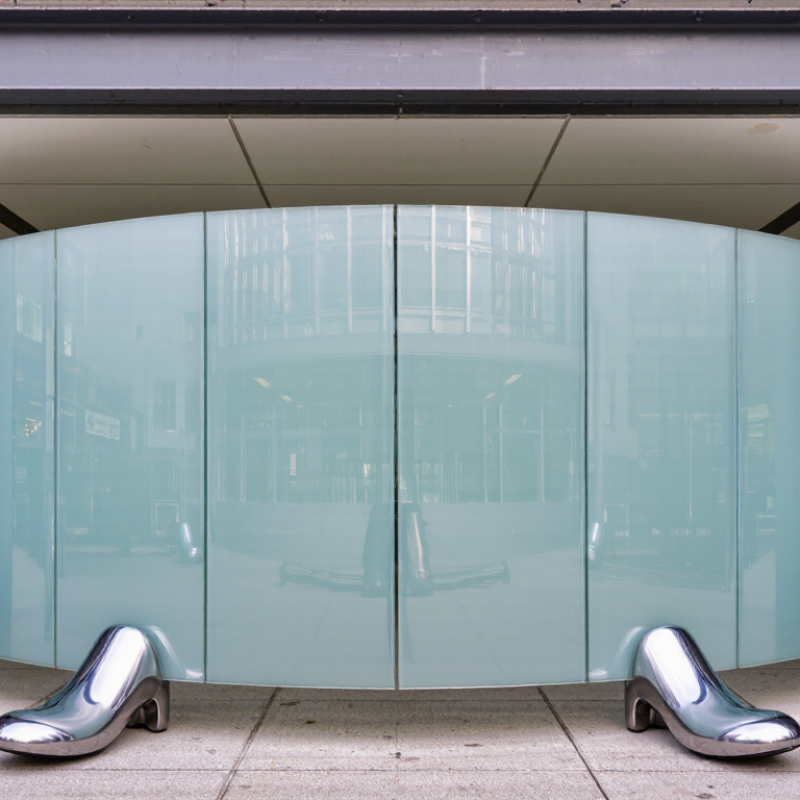
Load-bearing curved glass is glass formed into a curve and engineered to carry defined structural forces. It may resist wind pressure, support part of a roof, or transfer loads toward a frame. The exact role depends on the design. A curved shape alone does not make glass structural.
That distinction matters. Structural panels often use multiple glass plies joined by an interlayer, so fragments can remain attached if a ply breaks. Engineers also assess thickness, curvature, edge condition, support spacing, and expected deflection. The frame and connections matter just as much as the glass. If one connection shifts, the load path may change.
In practice, the term can be used a little loosely. A curved panel may look substantial yet serve only as a screen, while another may carry a defined share of a building’s load. Drawings and calculations should state what it supports, where its loads go, and how it behaves after damage. Installation tolerances deserve attention too; a small mismatch at an edge can create unwanted stress. These details are less visible than the curve, but they define what “load-bearing” means.
Curved glass begins as a flat sheet cut to size, with its edges finished before heating. In a controlled kiln, the glass softens and bends over a shaped mold under gravity or mechanical pressure. Heat, timing, and mold shape influence the final curve. The process takes care. Even a slight temperature difference can affect the shape or clarity.
After forming, the glass may be cooled slowly, heat-strengthened, or tempered, depending on its design and intended use. Controlled cooling creates surface compression, helping the glass resist certain impacts and temperature changes. It does not make glass unbreakable. Some curved panels are laminated, with a clear interlayer holding fragments if a pane breaks. Manufacturing methods vary, so the final strength depends on the glass type, thickness, curve, edges, and support details. A faint optical ripple may remain; it is worth checking samples before approving a large installation.
Tips: Ask how the panel was formed and strengthened. Check its specified thickness, edge finish, and test documentation. For load-bearing use, have a qualified professional assess the complete assembly, not just the glass.
Curved glass can support structural loads, but its shape alone does not make it safe. Engineers must check the glass make-up, curvature, supports, connections, and load duration. A curved panel may stiffen under some conditions, yet bending can also create concentrated stresses near edges and fixings. Small flaws matter.
ASTM E1300 load-resistance charts use a design probability of breakage of 8 lites per 1,000 for defined flat-glass cases and specified loads. This is a useful industry benchmark, not a design approval for curved panels. Curved glazing needs project-specific analysis, and often physical testing. Engineers should assess wind, snow, self-weight, temperature changes, and what happens if one ply cracks. A laminated build-up can help retain fragments, but it does not automatically provide a safe load path. The details can be awkward.
Tips: Ask for calculations that match the actual radius, glass thickness, support spacing, and edge details. Confirm the test setup reflects real connections. If those assumptions are unclear, pause and review them.
Curved glass can carry loads, but its capacity depends on radius, thickness, heat treatment, edge quality, and support spacing. A shallow curve may behave differently from a tight one. Small details matter. A chipped edge beside a metal shoe can become the starting point for a crack, especially under repeated loading.
ASTM E1300-24 provides procedures for estimating glass resistance under defined dimensions, supports, glass types, and load durations. It is not a universal approval for curved structural panels. Engineers should account for curvature, local contact stresses, wind or occupant loads, and the consequences of breakage. The National Glass Association’s technical guidance also stresses that glass selection and installation details must work as one system. A calculation alone is not enough; representative testing may be needed.
Safety glazing impact ratings do not prove load-bearing capacity. Under CPSC 16 CFR Part 1201, Category I and II impact tests use 150 and 400 foot-pounds, respectively. These thresholds address impact performance, not long-term support loads. Laminated glass can help retain fragments after breakage, but retained glass is not automatically safe to stand on. A model can still be wrong if its boundary conditions ignore a real clamp, uneven gasket, or installation gap. Specify inspection criteria and a replacement plan before the panel is installed.
Load-Bearing Curved Glass: 10 Practical Facts
Curved glass can carry structural loads, but its shape alone does not prove capacity. 1. Panels may be hot-bent in a furnace or cold-bent into a frame. 2. Curvature affects stiffness and changes how loads reach the supports. Geometry matters. 3. EN 572-1 gives soda-lime glass a nominal density of about 2,500 kg/m³. 4. Its elastic modulus is roughly 70 GPa, a useful material-design reference, not a safe-load rating. 5. Capacity depends on span, thickness, curvature, support details, and the applied load. ASTM E1300 offers a useful reference for flat-glass calculations; curved assemblies need project-specific engineering.
6. Laminated glass can help retain broken pieces, but its post-breakage capacity requires verification. 7. Heat-treated glass has different strength and breakage behavior from annealed glass. 8. Edge chips matter: small flaws near a support can trigger cracking under stress. Edges matter. 9. Interlayers may soften with heat, so temperature and duration affect performance. 10. Full-scale testing can reveal behavior that calculations miss, especially at joints and anchors. A technical review should consider wind, snow, self-weight, impact, and foreseeable damage. Industry guidance and test reports should identify the exact glass build-up and support conditions; a generic strength figure is not enough. The uncomfortable detail is that curved panels can distort reflections, and that visual effect may complicate inspection. Builders should check tolerances before installation, not after the glass is already carrying load.
| No. | Fact | What It Means in Practice | Key Design Consideration |
|---|---|---|---|
| 1 | Curved glass can be part of a load-bearing structure. | Engineered glass may carry specified loads in applications such as façades, canopies, and balustrades. | It must be designed for the actual loads, supports, connections, and building conditions; curvature alone does not make glass structurally adequate. |
| 2 | Laminated glass is commonly considered where post-breakage safety is important. | An interlayer can help retain broken glass fragments and may allow a pane to remain in place after breakage. | Post-breakage performance depends on the glass plies, interlayer, temperature, load duration, support details, and damage pattern. |
| 3 | Curved panes can be made from annealed, heat-strengthened, or fully tempered glass. | Different heat treatments provide different strength and breakage characteristics. | Glass type and fabrication route must be selected together with the structural design. Heat-treated glass cannot generally be cut or drilled after treatment. |
| 4 | Curvature affects how a pane responds to loads. | A curved panel may develop a combination of bending and in-plane forces, depending on its shape and restraint. | Flat-glass assumptions may not be sufficient; analysis should reflect the panel geometry, boundary conditions, and load direction. |
| 5 | Support and connection details are critical. | Loads must pass safely from the glass through its supports and connections into the surrounding structure. | Check bearing, edge clearances, local stress concentrations, movement, and compatibility between glass and supporting materials. |
| 6 | Curved-glass fabrication has geometric limits. | Achievable curvature, dimensions, and tolerances depend on the glass composition and manufacturing process. | Confirm the required radius, pane size, edge finish, and tolerances with the fabricator before finalizing the design. |
| 7 | Both permanent and temporary loads need consideration. | Design loads may include the glass’s own weight, wind, snow, maintenance, and construction-stage effects, as applicable. | Use the loads and combinations required by the applicable building code and project location. |
| 8 | Glass properties can vary with load duration and environmental conditions. | Long-term effects, temperature, and moisture can influence the behavior of glass assemblies and interlayers. | Structural checks should use appropriate material properties and account for the service environment and duration of loading. |
| 9 | Testing can help verify a design or assembly. | Project-specific testing may be used to assess performance where calculations alone do not address all relevant details. | Test specimens and procedures should represent the intended geometry, connections, support conditions, and loading as closely as practical. |
| 10 | There is no single universal load capacity for curved glass. | Capacity depends on the complete glass make-up, curvature, dimensions, supports, connections, loads, and applicable requirements. | A qualified structural professional should verify the complete assembly for the specific project. |
Note: This table is general information, not a design specification. Load-bearing curved glass requires project-specific engineering, fabrication review, and code compliance.
Yes, if engineers verify the glass, curvature, supports, connections, and load duration. Shape alone proves nothing.
Span, thickness, radius, support spacing, edge details, and applied loads all matter. Small changes can shift stresses.
Curvature can increase stiffness in some conditions, but it may concentrate stress near edges and fixings. It cuts both ways.
It can help retain broken fragments, but remaining load capacity needs separate verification. Retaining pieces is not the same as staying structurally safe.
They should assess wind, snow, self-weight, temperature changes, impact, and foreseeable damage. The real site may behave differently.
No. Flat-glass references can inform design, but curved assemblies need project-specific analysis and sometimes physical testing.
A small chip near a support can trigger cracking under stress. Check anchors, joints, and edge conditions closely.
It should match the actual radius, glass build-up, support spacing, and connections. A test with different fixings may offer false comfort.
Yes. Interlayers may soften with heat, and load duration matters. I would not treat one test result as the whole story.
Confirm tolerances and inspect reflections, which can distort and complicate visual checks. Better to notice awkward details early.
Can curved glass be used for load-bearing structures? Yes, but only when it is specifically engineered, tested, and installed for the intended loads. Curved glass is shaped through controlled heating or other forming processes, then may be strengthened or laminated to improve its ability to resist impact and retain fragments. Its structural performance depends on factors such as curvature, thickness, glass type, support conditions, connections, and the loads it must carry.
Load-bearing applications require careful design within established safety standards, with attention to deflection, edge stresses, temperature changes, and the consequences of breakage. Curved glass is not automatically stronger or suitable for structural use simply because it has been bent or reinforced. Engineers must assess the complete assembly, including supports and fixings, and select appropriate testing and inspection procedures. The key facts are that curved glass can serve structural roles in specific designs, but its limits and failure risks must be understood before it is used.
