MGW Glass
The use of bulletproof glass has become increasingly common in various security applications. As a popular choice for enhancing safety, many wonder, "can bulletproof glass withstand multiple high-caliber rounds?" This question is vital for understanding its effectiveness in real-life scenarios. Agencies and individuals rely on this material for protection against threats.
Bulletproof glass is engineered to absorb and disperse the energy from ballistic impacts. However, its ability to resist multiple shots from high-caliber firearms raises concerns. While advanced technologies aim to improve resilience, the truth remains complex. Factors such as thickness, material composition, and angle of impact play significant roles in performance.
Testing conditions also matter a great deal. In controlled environments, certain types of bulletproof glass can withstand multiple rounds. Yet, real-world situations can differ dramatically. Unexpected variables may introduce vulnerabilities. Thus, manufacturers constantly seek to innovate while users must remain cautious. Understanding these factors can help answer the critical question of its resilience against high-caliber threats.
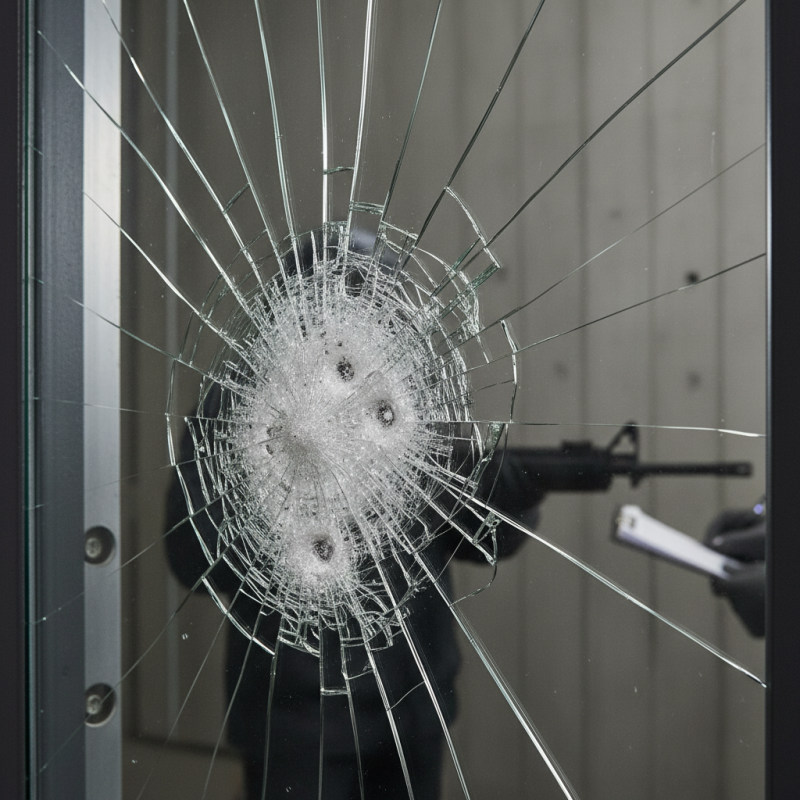
Bulletproof glass is more than just a trendy security feature. It is designed to absorb and disperse the energy from bullets. This material typically consists of layers of laminated glass and polycarbonate. The combination gives it strength while maintaining transparency.
When facing multiple high caliber shots, bulletproof glass must demonstrate its resilience. Various compositions can affect performance. Some glass types can withstand single impacts from large calibers but may not hold up against repeated strikes. Each layer is intended to reduce penetration, but after several impacts, wear and tear might compromise its integrity. This aspect is critical in evaluating its overall effectiveness.
Tips for Choosing Bulletproof Glass:
Consider the environment where it will be used. Different scenarios require various thicknesses and compositions. Light usage may need less durable options, while high-risk areas demand stronger glass. Always consult with security professionals to assess specific needs. Regular maintenance checks can also help identify potential weaknesses over time.
Bulletproof glass is engineered using various materials. The most common are laminated glass and polycarbonate. Laminated glass features layers of glass and plastic, creating a tough barrier. It absorbs impact well but may shatter under extreme conditions.
Polycarbonate, on the other hand, is lighter and more flexible but can scratch easily.
Manufacturing processes for bulletproof glass involve intense heat and pressure. These methods ensure the glass maintains clarity while providing strength. However, the degree of resilience can vary.
Multiple high-caliber shots can stress the materials, leading to potential failure. Continuous innovation in production is essential for improving effectiveness.
Tips: When selecting bulletproof glass, review materials carefully. Compare resistance ratings based on intended use. Regularly inspect for signs of wear or damage. Remember, no glass is completely impervious. Always prioritize safety measures beyond just glass selection.
When testing bulletproof glass against high caliber shots, various methods are employed to evaluate its effectiveness. The first step often involves selecting appropriate ammunition types. This is crucial for accurate results. Each caliber presents unique challenges. Understanding bullet size, velocity, and impact force is essential to simulate real-world scenarios.
The glass used in testing typically undergoes rigorous evaluations. An essential aspect includes examining the material’s layers and thickness. Many tests involve firing at different angles and distances. These variables impact how the glass reacts. Testing facilities generally follow strict protocols to ensure reliability and repeatability.
However, even advanced glass can show weaknesses. It might withstand several shots but fail under specific conditions. This raises questions about limitations. Factors like heat and stress over time can affect performance. Continuous research is needed to improve materials. The quest for perfect resistance remains a work in progress.
The resilience of bulletproof glass has long intrigued security experts and enthusiasts alike. When it comes to multiple high-caliber shots, the performance becomes even more critical. Each bullet impacts the glass differently, and factors such as angle, distance, and projectile type play important roles. High-caliber rounds can deliver significant energy upon impact, potentially compromising the integrity of the glass.
Testing under real-world conditions reveals both strengths and weaknesses. In some cases, the glass can withstand several hits before showing visible damage. However, after repeated fire, microfractures may begin to form, weakening its protective capabilities. Such phenomena highlight the necessity for continued research on materials used in ballistic glass. It’s crucial to assess how multiple impacts affect long-term durability and safety.
Moreover, designing effective bulletproof glass is not just about material strength. Think about the layers involved. Each layer must work cohesively to absorb and dissipate energy from the bullets. Flaws in design can create vulnerabilities. Thus, engineers must balance thickness, weight, and transparency. How do these trade-offs affect real-life application and effectiveness? The quest for optimal solutions remains an evolving challenge in security technology.
| Shot Type | Caliber | Velocity (m/s) | Impact Resistance | Number of Shots Survived |
|---|---|---|---|---|
| FMJ (Full Metal Jacket) | .50 BMG | 884 | High | 3 |
| HP (Hollow Point) | .44 Magnum | 426 | Medium | 5 |
| AP (Armor Piercing) | 7.62x51mm NATO | 850 | Very High | 2 |
| SP (Soft Point) | .30-06 Springfield | 870 | Medium | 4 |
Bulletproof glass offers a high level of protection, yet it is not infallible. Industry reports indicate that while top-tier bullet-resistant materials can withstand shots from handguns and some lower caliber rifles, they often struggle against multiple high caliber shots. For example, a report by the National Institute of Justice notes that standard bulletproof glass may fail after just a few hits, particularly when faced with armor-piercing rounds.
The durability of bulletproof glass is influenced by several factors, including thickness and material composition. Typically, ballistic glass consists of layers of laminated glass and polycarbonate. However, each round weakens the structural integrity. Experts suggest that after three to five impactful shots, even the best-grade glass can exhibit significant performance degradation. This phenomenon raises questions about its effectiveness in real-world scenarios where multiple shots may be expected.
Moreover, real-life application varies significantly from laboratory tests. In high-stress situations, minor cracks from initial impacts can compromise the glass. This leads to potential failures when a subsequent round strikes. Continuous advancements in materials science aim to address these issues, yet the risk remains a practical concern for many users. Thus, understanding the limitations of bulletproof glass is crucial for those relying on its protective capabilities.
: Bulletproof glass absorbs and disperses energy from bullets. It helps protect against gunfire.
It consists of layers of laminated glass and polycarbonate. This combination offers both strength and clarity.
It can withstand several shots, but its effectiveness may decline after just a few impacts.
Thickness, material composition, and the number of impacts can weaken its structural integrity over time.
Yes, professional advice helps assess specific needs and ensures proper selection for various environments.
No, different types have varying resistance levels. Regular maintenance is essential to ensure safety.
Its performance can degrade significantly after three to five strikes, leading to possible failures.
Yes, initial impacts can create cracks, which may lead to failures when further shots are fired.
Regular inspections are important to identify wear signs and maintain optimal protective capabilities.
No, no glass is entirely bulletproof. It's crucial to combine it with other safety measures.
Bulletproof glass is designed to provide protection against ballistic threats, made from layered materials that absorb and disperse impact. Different types of bulletproof glass, such as laminated glass and polycarbonate, are produced using various manufacturing processes to enhance their resistance to projectiles. Rigorous testing methods evaluate how well these materials can withstand multiple high-caliber rounds, simulating real-world scenarios to determine their protective capabilities.
When examining whether bulletproof glass can withstand multiple high-caliber rounds, performance under repeated fire is critical. While some glass can endure several impacts, its durability has limits, and repeated hits can compromise its integrity. Understanding these limitations is essential for users to know when bulletproof glass may ultimately fail, thereby guiding appropriate usage in protective applications.
