 MGW Glass
MGW Glass
MGW Glass
The question of whether "can bulletproof glass withstand multiple high-caliber rounds" is a pressing one in security discussions. Bulletproof glass is engineered to offer protection against a variety of projectiles. Its layered construction typically features polycarbonate and laminate materials. The aim is to absorb and disperse the energy from bullets.
However, the effectiveness of bulletproof glass against repeated high-caliber rounds remains complex. Many factors affect performance. The type of bullet, angle of impact, and distance play significant roles. While some glass can endure a few shots, durability diminishes rapidly. Testing has shown that after several rounds, the integrity of the glass can weaken significantly. Users must consider these realities when assessing safety.
Understanding the limitations of bulletproof glass is crucial. It provides added protection, but it is not invincible. Awareness of these aspects can guide informed decisions in security planning. Bulletproof glass can serve critical roles in defense, but one must remain cautious and realistic about its capabilities.
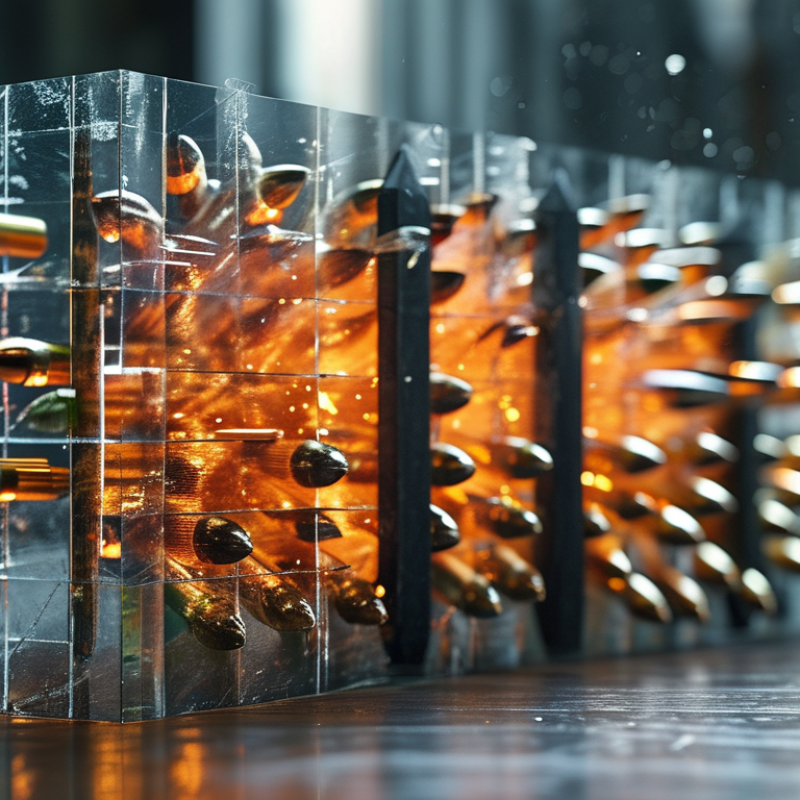
Bulletproof glass, often found in security applications, combines multiple materials for enhanced protection. Typically, it consists of layers of glass and polycarbonate, arranged strategically to absorb and disperse the energy from projectiles. According to a 2022 report by the National Institute of Justice, specific configurations can withstand gunfire from a range of firearms, including high-caliber rounds. This data highlights the material's evolving technology and design for improved safety.
The composition of bulletproof glass is essential for its effectiveness. Standard options include laminated glass with a polycarbonate layer, which provides impact resistance and clarity. Recent advancements show that some formulations include specialized composites that can withstand higher energy impacts. However, bulletproof glass is not foolproof. The ability to resist multiple shots also depends on factors like the angle of impact and the type of ammunition used. Industry studies indicate that while upgraded versions improve performance, challenges remain in maintaining transparency and weight efficiency.
Each configuration presents its own set of trade-offs. Heavier materials can offer better protection, but they can hinder mobility and usability. The balance between strength and practicality is a constant consideration for manufacturers. Ongoing research aims to refine these properties while also addressing cost implications. In this rapidly evolving field, the quest for a perfect design continues, raising questions about future innovations in ballistic protection.
: The composition, thickness, angle of impact, and type of ammunition significantly influence performance.
Yes, but not indefinitely. Each impact may degrade integrity, resulting in eventual failure.
Temperature and humidity can affect resilience, potentially causing micro-cracks and reduced performance.
No, some models struggle with high-caliber rounds while performing well against others.
Researchers are investigating lightweight composites and ceramics to enhance durability and protection.
Yes, repeated impacts can lead to cracks and critical failure over time.
Higher energy from different rounds creates varied damage; hollow points may cause more harm than full metal jackets.
No, advancements improve reliability, but no solution guarantees complete safety in all scenarios.
Users should assess the material composition, expected threats, and real-world testing outcomes.
Yes, a false sense of security can occur if users believe it offers complete protection after multiple hits.
The article "Can Bulletproof Glass Resist Multiple High Caliber Rounds?" explores the composition and structural characteristics of bulletproof glass, which are critical to its effectiveness in ballistic protection. It discusses the mechanisms by which this glass resists high-caliber projectiles, detailing the performance ratings derived from standardized ballistic tests. These ratings provide insight into how well bulletproof glass can withstand multiple high-caliber rounds.
Several factors influence the glass's resistance to repeated impacts, including its thickness, layering technique, and the materials used in its construction. While advancements in bulletproof glass technology are continually being made, the article also highlights its limitations, particularly concerning sustained assaults from high-caliber weapons. Ultimately, understanding these dynamics is crucial for evaluating whether bulletproof glass can truly withstand multiple high-caliber rounds in real-world scenarios.
